
Clay, from Three Rivers to North Syracuse
Syracuse Septic Pros Septic Service in Clay, NY
Septic work on the flat lake-plain ground between the Oneida and Seneca rivers, where the water table decides most of it.
- Syracuse and ten towns within 20 miles
- Written price before any digging
- Licensed, insured local contractors
- Built around Onondaga County soils
Syracuse Septic Pros connects homeowners in the town of Clay with local septic crews for pumping, inspections, repairs and replacement systems. Clay is the most populous town in this service area, about 60,500 people at the 2020 count, and many of its homes outside the sewered areas sit on flat, silty ground left behind by an old glacial lake.
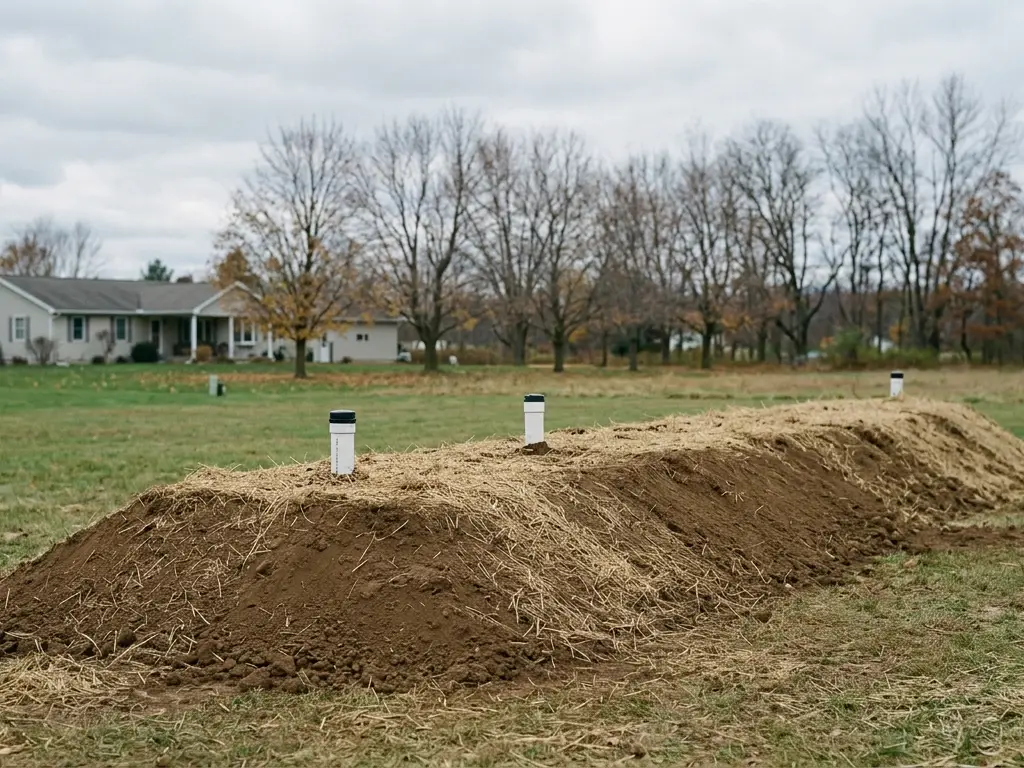
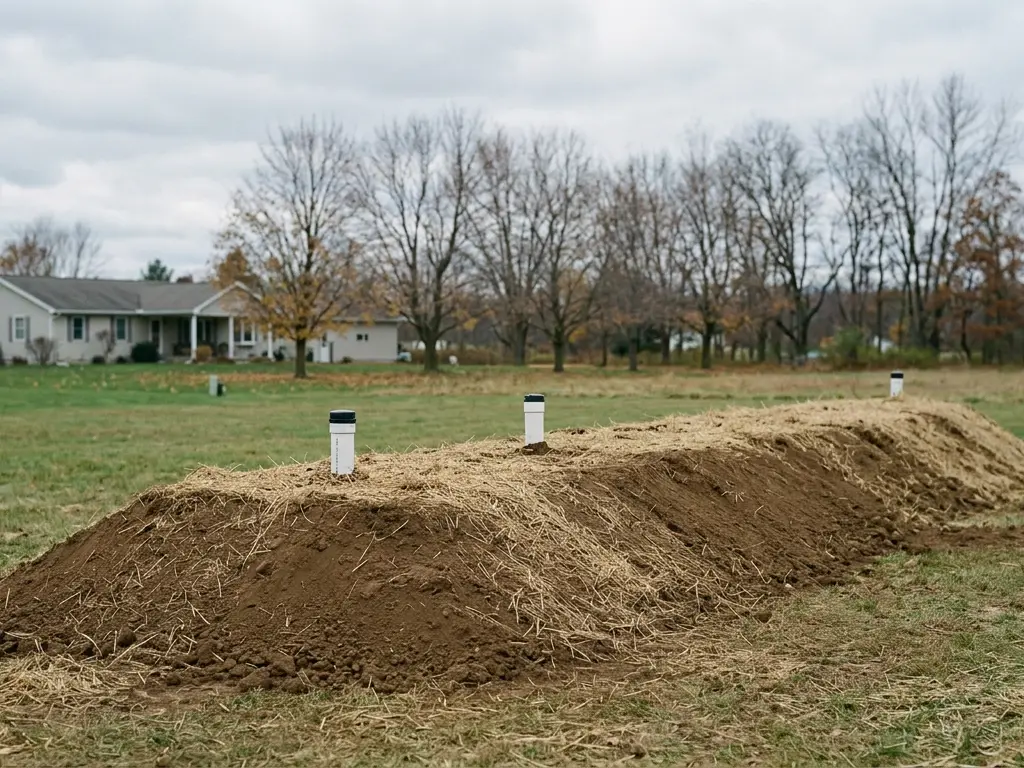
In Clay a field that sits in spring groundwater can look fine all summer, so skipping the $450 pump-out and check until it backs up in April often means a $15,000 to $25,000 raised system instead of a repair.
$325 to $600 to pump; $15,000 to $25,000 for a raised system
Pumping a standard tank in Clay typically runs $325 to $600. Replacement is where Clay differs from the hill towns: on this ground a new field is often a raised or mound system, which a Syracuse excavator prices at $15,000 to $25,000. A conventional field, where the soil allows one, runs about $8,000 to $15,000.
Get a price: (315) 922-5458What failing systems look like in Clay
- Backups or slow drains that show up in March and April and fade by July
- Water flowing back into the tank from the field as soon as it is pumped
- Soggy ground over the field on a lot that is otherwise flat and open
- A sewage smell in the yard after heavy rain or snowmelt
- A sump pump or basement that stays wet all spring
Lake-plain soil and a high water table
The north side of Syracuse is an old lake bed. USDA soil maps across Clay are dominated by Williamson, Collamer and Niagara soils, deep silty lake-plain soils that range from moderately well drained to somewhat poorly drained. In a 25-point sample across the town, 24 points were rated very limited for conventional septic absorption fields, and the most common reason by far was depth to a saturated zone, followed by slow water movement and, in low spots, ponding.
That is a rating for conventional trenches, not a verdict on the lot. It means the design has to deal with water that rises close to the surface for part of the year, which is why so many replacement systems here end up as mound or raised systems.
Three rivers and the Oswego County line
Clay is bounded by water. The Oneida River marks the northern town line and the border with Oswego County, and the Seneca River marks the western line; the two join to form the Oswego River near Three Rivers. The canal system follows those rivers around the edge of the town. Homes along those banks sit in the flattest, wettest ground in Clay.
New York's standard keeps an absorption field at least 100 feet from a stream, lake or wetland and rules out land below the ten-year flood level, so riverside lots often have little room to relocate a field.
Not sure what the system needs? Describe what you are seeing and get a straight answer on what it usually takes.
Call (315) 922-5458Timing work in Clay
Spring is the worst time to diagnose a field here and the most revealing. A system that backs up only in spring is telling you the field is being flooded from below. Pumping helps for a while; a leach field repair or replacement is what fixes it. For a replacement, testing in spring shows the water table honestly, and a design using general fill has to allow a six-month stabilization with a freeze and thaw under Onondaga County's fill rules.
Part of the village of North Syracuse lies in Clay, and some neighborhoods are on public sewer and need none of this. Check a tax bill for a sewer charge, or ask the town, if you are not sure.
Clay backup in spring thaw
Cut water use and call. A pump-out and a look at the liquid level tell you whether this is a full tank or a field sitting in groundwater, and that decides what comes next.
Call (315) 922-5458Questions people ask
How much does septic pumping cost in Clay, NY?
Typically $325 to $600 for a standard residential tank.
Why do so many homes in Clay need mound systems?
The lake-plain soils often have a saturated zone close to the surface, and New York wants four feet of useable soil below a conventional field.
What are the signs my septic system is failing in Clay?
Spring backups, water flowing back from the field after pumping, and soggy ground over the field.
How much does a septic replacement cost in Clay?
A raised or mound system typically runs $15,000 to $25,000; a conventional field about $8,000 to $15,000 where the soil allows.
Who approves septic work in Clay?
The Onondaga County Health Department.
Common jobs here
-
Mound and raised systems
Lifting the absorption field above ground that cannot treat wastewater on its own, built in fill that has to be placed and tested properly.
-
Septic tank pumping
Emptying the sludge and scum layers before they reach the leach field, on a schedule set by the tank and the household.
-
Leach field repair
Finding out why a field is slowing down, and fixing the causes that can be fixed before the only answer is a new one.
Talk it through before anyone digs
Say what the house is doing, how old the system is and when the tank was last pumped. You will hear what the job usually involves, what it tends to cost, and whether it needs digging at all.
Call (315) 922-5458