
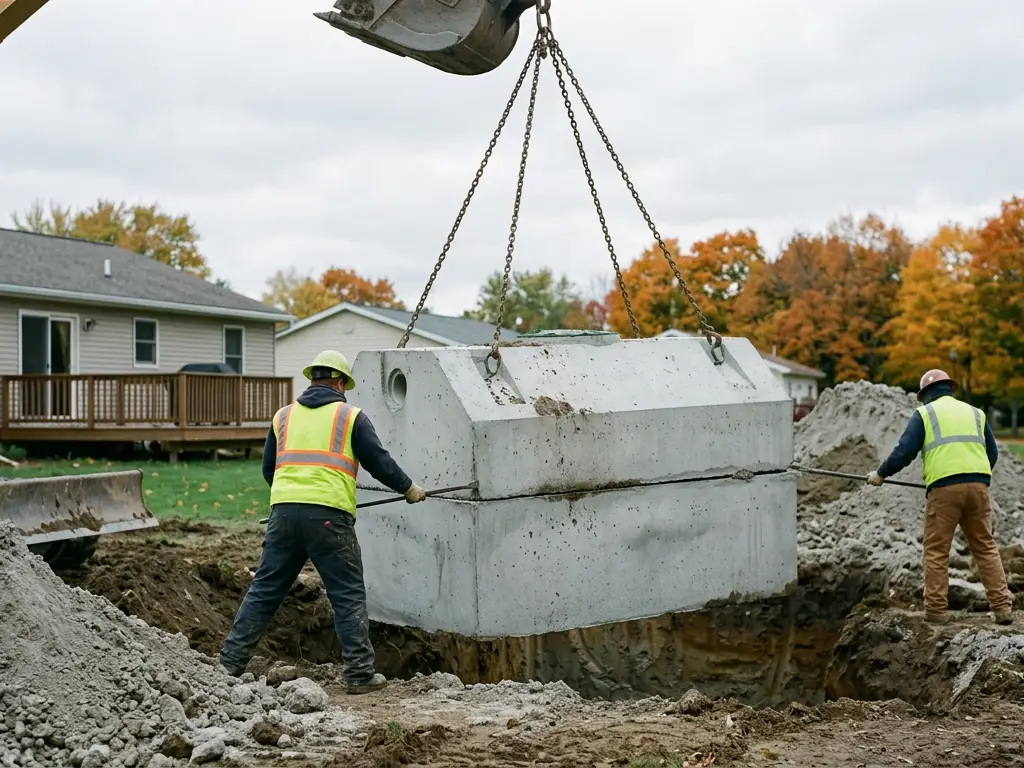
New tanks for systems with a working field
Syracuse Septic Pros: Septic Tank Replacement in Syracuse, NY
Swapping a rusted, cracked or undersized tank for a properly sized concrete one, without touching a field that still works.
- Syracuse and ten towns within 20 miles
- Typical prices published for every job
- Onondaga, Oswego and Madison county rules explained
- Hire licensed, insured local contractors
- Ask for a written price before work starts
Syracuse Septic Pros is a referral website for septic tank replacement in Syracuse and the surrounding towns. When the tank is the problem and the leach field is still healthy, replacing the tank alone is one of the best-value septic jobs there is, and it protects the field from the solids a failing tank lets through. Hire licensed, insured local contractors, and have the field checked before the new tank is ordered.
A collapsing steel tank that lets solids pour into the trenches can turn a $3,000 to $6,000 tank swap into an $8,000 to $15,000 field replacement within a season.
Why Older Tanks Around Syracuse Give Out
Many older systems in the towns around Syracuse were built with steel tanks, which corrode from the top down, or with concrete tanks whose baffles have rotted away. A tank that lets groundwater in is also a problem on the wet lake-plain soils north of the city, because it fills itself in spring and pushes that water out into the field.
Undersized tanks are the other common story. A house that has added bedrooms since the system was built is often running on a tank sized for a smaller household.
What Goes Into a Tank Replacement Price
Typical range: $3,000 to $6,000 for a tank-only replacement
Septic tank replacement around Syracuse typically costs $3,000 to $6,000 when the field is still functional, the range a Syracuse excavator's 2026 cost guide gives for tank-only replacement. A 1,000 to 1,500 gallon concrete tank is about $1,200 to $2,500 delivered and set. Ask for a written price before work starts.
Call (315) 922-5458The tank is only part of the bill. Excavation, removing or abandoning the old tank, new inlet and outlet connections and backfill make up the rest, and a tank buried deep or behind a fence costs more to reach. Adding a septic tank riser while the hole is open is cheaper than digging for it later.
The bedroom count sets the size, and a bigger tank costs more to buy and set. The Syracuse septic cost guide lists the tank band beside the field and system bands.
What the New Tank Has to Meet
New tanks are built to New York's residential standard, Appendix 75-A:
- Sized by bedrooms: 1,000 gallons for one to three, 1,250 for four, 1,500 for five, 1,750 for six
- Watertight and made of durable material that resists corrosion, frost damage and cracking
- Able to support at least 300 pounds per square foot after installation
- At least six feet between the inlet and the outlet, with baffles
- Set 50 feet from a well or watercourse and 10 feet from the house and the property line
A like-for-like tank in the same spot may not need a design professional; moving it or changing the system can. In Onondaga County an in-kind swap goes through the Application for Repair, and the Division of Environmental Health inspects before backfill.
Checking the Field Before Committing
A tank replacement only makes sense if the field is healthy. Before quoting, a careful contractor pumps the tank, watches for water flowing back from the field, and checks the distribution box. If solids have already reached the trenches, the conversation turns to leach field repair or replacement, and it is far better to know that before the new tank goes in.
In Lysander and Van Buren, along the Seneca River, Onondaga County's grant page still lists the river between the Cross Lake outlet and Klein Island, but DEC's current eligible list does not. Riverfront owners should confirm eligibility with the county Health Department before planning a tank swap around the state replacement fund.
Access Built Into the New Tank
The state standard says tank covers must always be accessible, and where a manhole sits more than 12 inches below grade, each opening gets an extension collar. A tank with 48 inches or more of liquid depth needs a top opening at least 20 inches across. Getting that right now saves digging at every pump-out for the life of the tank.
Signs the Tank Itself Has Failed
- The pumper reports a steel tank rusting through at the top or the baffles
- A cracked or collapsing lid, or soil falling into the tank
- The tank fills with groundwater when no one is using water
- A tank far smaller than the bedroom count needs
- A sinkhole or depression over the tank
Schedule Septic Tank Replacement in Syracuse
Pumper says the tank is rusting through? Do not drive or park over it, because a failing steel lid can collapse. Plan the replacement with a check of the field, so the new tank protects what still works.
Call (315) 922-5458Background reading: Septic Costs Around Syracuse and How Long Septic Systems Last.
Frequently Asked Questions
Septic Tank Replacement Questions From Syracuse Homeowners
How much does septic tank replacement cost in Syracuse?
Typically $3,000 to $6,000 for a tank-only replacement when the field still works.
What size septic tank do I need?
New York requires 1,000 gallons for one to three bedrooms, 1,250 for four, 1,500 for five and 1,750 for six.
What are the signs my septic tank needs replacing?
A rusting steel tank, cracked or collapsing lid, groundwater leaking in, a sinkhole over the tank, or a tank too small for the house.
Can I replace just the septic tank and keep the leach field?
Yes, if the field is healthy. It should be checked before the new tank goes in.
Are concrete or plastic septic tanks better?
Both can meet the standard if they are watertight and strong enough. Concrete is heavy, which helps a tank stay put in wet ground; plastic is lighter to set and must be anchored where groundwater is high.