
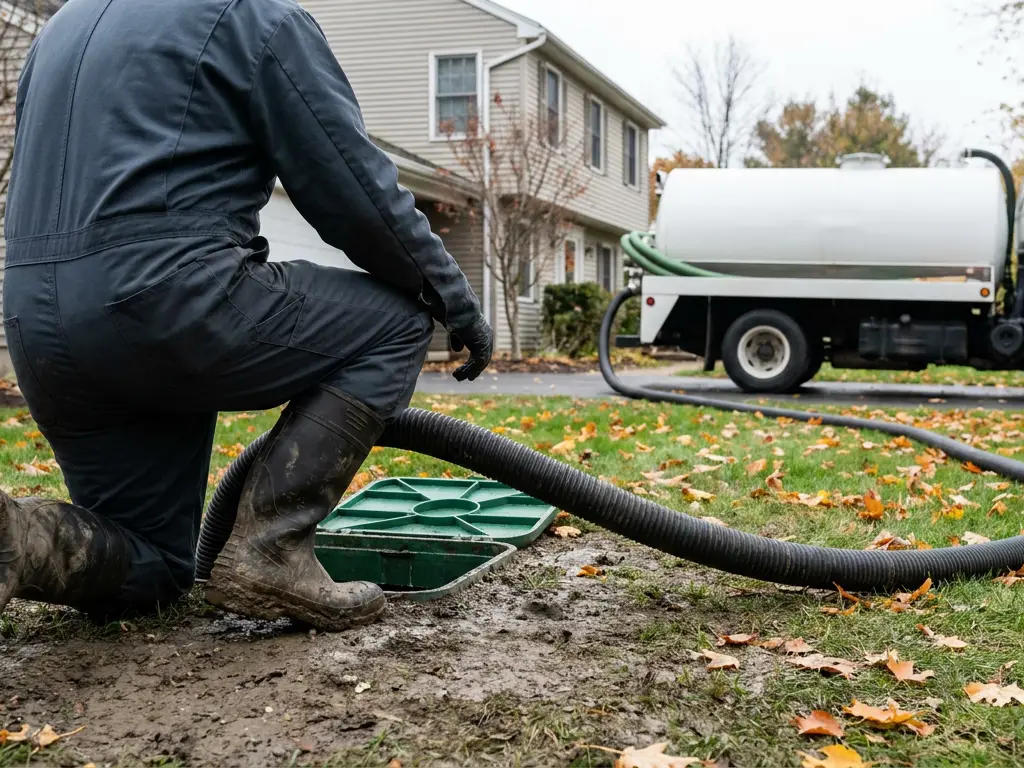
Pump-outs for Onondaga County tanks
Syracuse Septic Pros Septic Tank Pumping in Syracuse
Emptying the sludge and scum layers before they reach the leach field, on a schedule set by the tank and the household.
- Syracuse and ten towns within 20 miles
- Written price before any digging
- Licensed, insured local contractors
- Built around Onondaga County soils
Syracuse Septic Pros arranges septic tank pumping for homes in Syracuse and the towns around it, carried out by local pumping crews with their own trucks and their own disposal arrangements. A pump-out is the cheapest thing that ever happens to a septic system, and it is also the moment someone actually looks inside the tank, which is why it is worth doing properly rather than quickly.
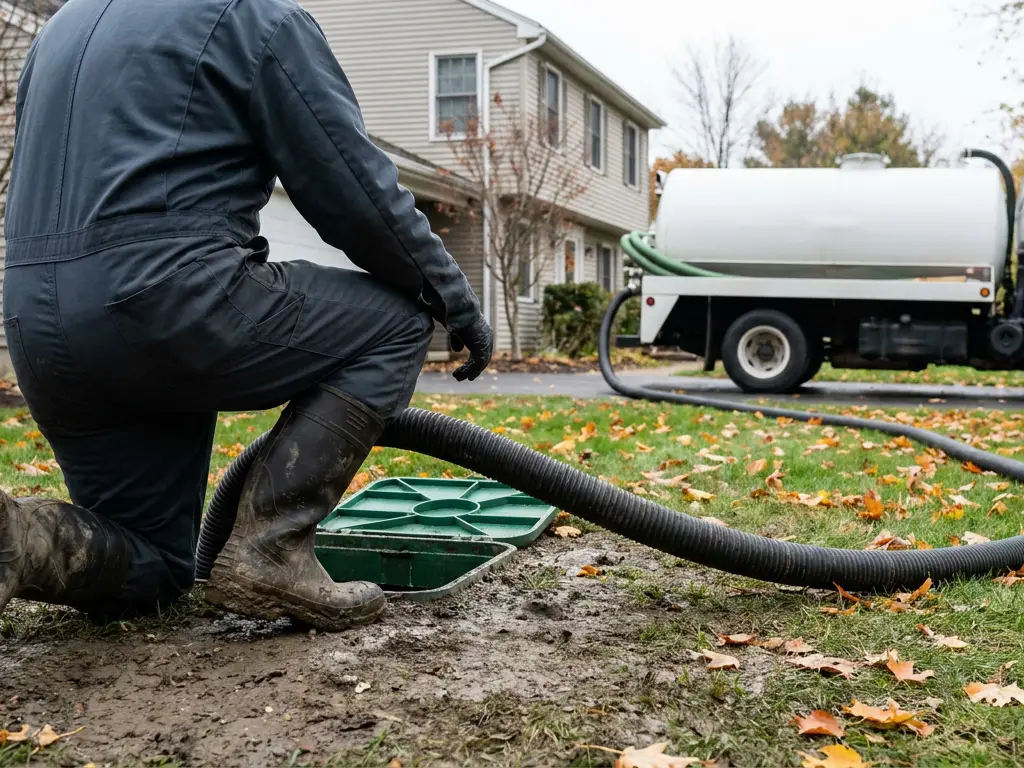
Skip the pump-out long enough and floating solids ride out of the tank into the leach field, turning a $450 visit into an $8,000 to $15,000 field replacement that no amount of pumping can undo.
$325 to $600 for a standard residential tank
Septic tank pumping around Syracuse typically runs $325 to $600 for a 1,000 to 1,250 gallon tank. The number moves with tank size, how deep the lids are buried, whether a riser exists or someone has to dig, the distance the hose has to run, and whether the tank has one compartment or two. Directory surveys of Onondaga County put a standard pump-out between $325 and $500, with bigger or harder tanks above that.
Get a price: (315) 922-5458Signs the tank is due before the calendar says so
- Toilets and tubs drain slower than they used to, all at once rather than one fixture
- Gurgling in the drains after the washing machine empties
- A sewage smell near the tank lid or the leach field on a still day
- Grass over the tank or field greener and faster growing than the rest of the lawn
- Nobody in the house can remember when the tank was last pumped
How often an Onondaga County tank needs pumping
The usual rule of thumb is every three to five years, and it is a starting point rather than an answer. A 1,000 gallon tank serving two people can go longer. The same tank serving a family of five with a garbage disposal and a high-efficiency washer running every day will need attention sooner.
New York sizes tanks by bedrooms, not by the people who actually live there. Under the state's residential standard, Appendix 75-A, a one to three bedroom house needs at least a 1,000 gallon tank, a four bedroom house 1,250 gallons, five bedrooms 1,500 and six bedrooms 1,750. A house that has grown a bedroom since the tank went in is often running on a tank sized for a smaller household, and that shortens the interval.
What a proper pump-out includes
The crew locates and opens the tank, pumps the liquid, sludge and scum through the main manhole rather than a small inspection port, and breaks up the crust so it comes out with everything else.
- Both compartments pumped on a two-compartment tank
- A look at the inlet and outlet baffles, which are the parts that keep solids in the tank
- The effluent filter pulled and rinsed, where one is fitted
- The lid set back and sealed so surface water and snowmelt stay out
Not sure what the system needs? Describe what you are seeing and get a straight answer on what it usually takes.
Call (315) 922-5458Winter pumping in lake-effect country
Tanks around Syracuse get pumped all year, but winter adds work. Lids buried a foot or two down sit under frozen ground and whatever lake-effect snow has piled up, so the crew may need to thaw or dig before they can open anything. A riser that brings the lid to grade turns that into a shovel job. If the tank is due in autumn, pumping before the ground freezes is usually the cheaper visit.
In spring, when snowmelt saturates the ground, a pump-out can buy a marginal field time, but it does not fix one that is failing.
Pumping as the diagnostic visit
Most expensive septic problems around Syracuse are found by the pumper, not by the homeowner. A cracked baffle, roots at the inlet or water pouring back from the leach field all show up with the lid open. If something is found, you get it described in plain terms with a typical price range before anything else happens.
Homes in Clay and Cicero sit on silty lake-plain soils where the water table rides high for part of the year, so a pumper seeing water flow backward into an empty tank there is seeing something common and worth acting on. If the tank also needs a check for a sale, ask for a septic inspection on the same visit.
Sewage coming up in a drain right now
Stop running water in the house, including the washer and dishwasher. A full tank that cannot drain into its field will push back into the lowest fixture first. Call and describe what you see; a pump-out is usually the first step either way.
Call (315) 922-5458Questions people ask
How much does septic pumping cost in Syracuse?
A standard residential pump-out typically runs $325 to $600 for a 1,000 to 1,250 gallon tank. Buried lids, long hose runs and larger tanks push it toward the top of that range.
How often should I pump my septic tank?
Every three to five years is the usual starting point. Household size, tank size, a garbage disposal and heavy laundry all shorten it.
What are the signs my septic tank is full?
Slow drains across the whole house, gurgling after the washer empties, a sewage smell near the tank or field, and unusually green grass over the system.
Can you pump a septic tank in winter?
Yes. Frozen ground and snow over the lids add digging time, so a riser or pumping before the freeze keeps the cost down.
Do septic additives replace pumping?
No. Solids that settle in the tank still have to be physically removed. Additives do not remove sludge, and some move solids toward the field.
How big is my septic tank?
New York requires at least 1,000 gallons for one to three bedrooms, 1,250 for four, 1,500 for five and 1,750 for six. Older tanks may be smaller.
Often done together
-
Septic inspection
A look at the tank, the baffles, the distribution box and the field, written up so a buyer, seller or lender can act on it.
-
Tank locating and risers
Locating a tank nobody can find, and fitting a riser so the next visit starts with a shovel instead of a search.
-
Septic backup
Finding out whether it is a clogged line, a full tank or a failing field, and fixing the right one first.
Talk it through before anyone digs
Say what the house is doing, how old the system is and when the tank was last pumped. You will hear what the job usually involves, what it tends to cost, and whether it needs digging at all.
Call (315) 922-5458