
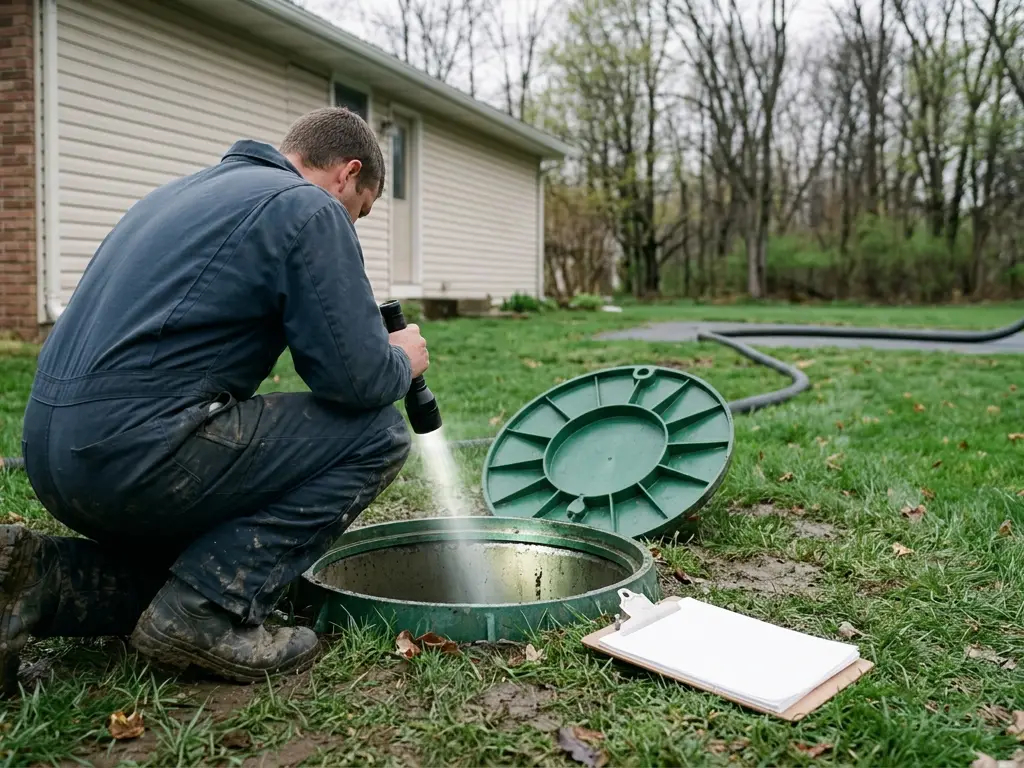
Inspections for home sales and peace of mind
Syracuse Septic Pros Septic Inspection in Syracuse
A look at the tank, the baffles, the distribution box and the field, written up so a buyer, seller or lender can act on it.
- Syracuse and ten towns within 20 miles
- Written price before any digging
- Licensed, insured local contractors
- Built around Onondaga County soils
Syracuse Septic Pros connects buyers, sellers and owners in Syracuse and the surrounding towns with local septic crews who inspect systems and write up what they find. An inspection is the only way to know what a buried system is doing, and before a house changes hands it is far cheaper to find a failing field on paper than after closing.
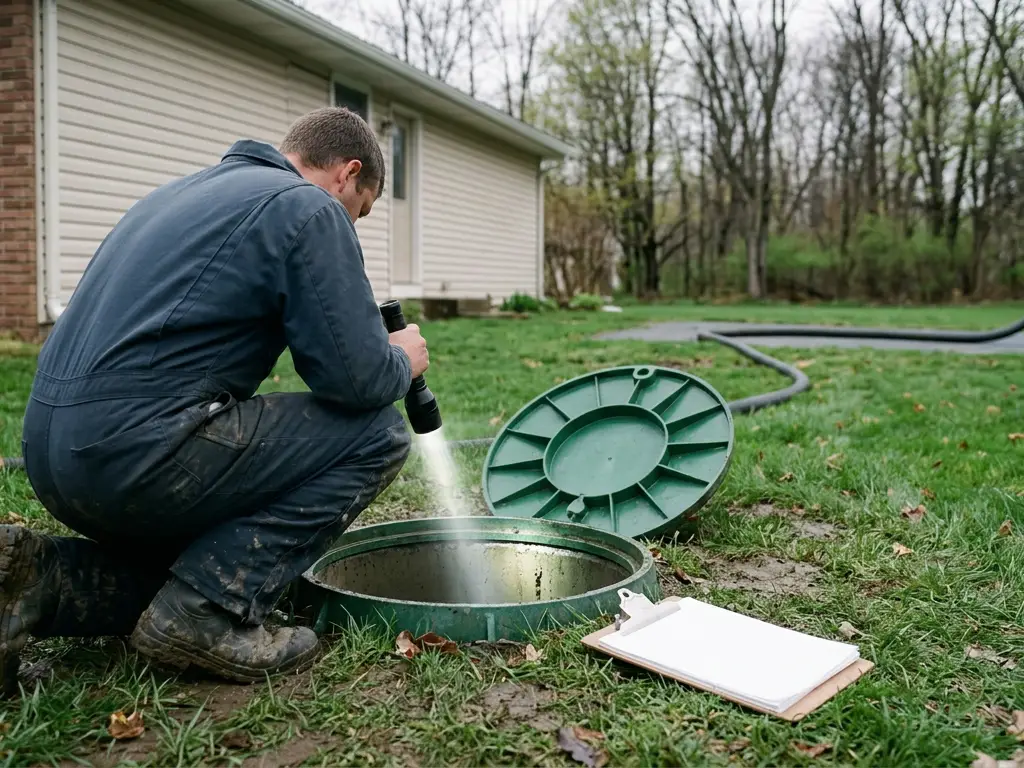
A $375 inspection that finds a saturated field before closing turns a surprise $15,000 replacement into a negotiation over the sale price, instead of the new owner's first bill.
$375 to $1,075 depending on scope
A septic inspection in the Syracuse area typically costs $375 to $1,075. Directory surveys put a standard visual inspection at about $375 to $575 and a full inspection with a camera and a written report, the kind often wanted for a sale, at about $675 to $1,075. Pumping is usually part of a real inspection and may be priced separately.
Get a price: (315) 922-5458When an inspection is worth booking
- You are buying a house on a septic system in Onondaga, Oswego or Madison County
- A lender or an insurer has asked for the septic system to be checked
- You bought a house and the seller could not say when the tank was last pumped
- The house has had a bedroom added or a larger family moved in
- Wet spots, smells or slow drains have started and you want to know why
What gets checked
A useful septic inspection opens the system up rather than walking the lawn. It usually covers:
- Locating and exposing the tank, and pumping it so the walls, floor and baffles can actually be seen
- The liquid level before pumping, and whether water flows back from the field once the tank is empty
- Inlet and outlet baffles, and the effluent filter where one exists
- The distribution box, checked for level, cracks and solids carried over from the tank
- The leach field, probed and walked for saturation, surfacing effluent and settled trenches
- Tank size against the bedroom count New York uses to size tanks
A dye test on its own is not an inspection. It can show effluent surfacing on the day, but it cannot show sludge depth, baffle condition or a tank that is slowly failing. The difference is spelled out on the septic dye test page.
Buying on septic around Syracuse
Most homes in the city of Syracuse are on public sewer. Septic systems sit on its edges and throughout the towns, from the lake plain in Clay and Cicero to the hills of Onondaga and Pompey. Many of those systems are decades old and were built before the current state standard, Appendix 75-A, took effect in its present form in 2016.
Buyers often ask whether the county requires an inspection at sale. Check current rules with the county health department for the specific property, because watershed areas such as Skaneateles and Otisco lakes carry extra requirements. Whatever the rule, a lender or a cautious buyer will usually ask for one anyway.
Not sure what the system needs? Describe what you are seeing and get a straight answer on what it usually takes.
Call (315) 922-5458Reading the report
A clear report says what was found, what it means, and what it usually costs to fix. A baffle that needs replacing is a few hundred dollars. A tank sized below the bedroom count is a note for the future. Effluent surfacing over the field, or a field that floods the tank as soon as it is pumped, is the finding that changes a sale.
If the finding is a failed field, the next question is what the lot will accept. Soils across Onondaga County are rated very limited for conventional fields in many places, so the answer may be a raised or mound system rather than a like-for-like trench.
Timing an inspection in a sale
Book early in the contingency window. Winter adds a day or two when lids are under frozen ground, and a finding that needs a second visit, a camera or a design professional takes time to price. Sellers who inspect before listing avoid that squeeze entirely and can hand buyers a report on day one.
Closing date already set
If the contingency window is short, say so when you call. Crews can often prioritise a pump-and-inspect visit, and knowing the deadline decides whether a camera or a second visit fits before closing.
Call (315) 922-5458Questions people ask
How much is a septic inspection in Syracuse?
Typically $375 to $1,075. A standard visual inspection runs about $375 to $575, and a full inspection with camera and written report about $675 to $1,075.
Does Onondaga County require a septic inspection when a house is sold?
Check with the county health department for the specific address, since watershed areas have extra rules. Lenders and buyers often ask for one regardless.
What are the signs of a failing septic system during an inspection?
Effluent surfacing over the field, water flowing back into the tank after pumping, a high liquid level, solids in the distribution box and damaged baffles.
Is a dye test the same as an inspection?
No. A dye test only shows whether effluent surfaces on the day. It cannot show sludge depth, baffle condition or tank integrity.
How long does a septic inspection take?
Usually a few hours on site including pumping. Buried lids, frozen ground or a camera run add time.
Often done together
-
Septic dye test
A tracer dye run through the plumbing, then a watch over the field for effluent coming to the surface. Useful, and limited.
-
Septic tank pumping
Emptying the sludge and scum layers before they reach the leach field, on a schedule set by the tank and the household.
-
Leach field repair
Finding out why a field is slowing down, and fixing the causes that can be fixed before the only answer is a new one.
Talk it through before anyone digs
Say what the house is doing, how old the system is and when the tank was last pumped. You will hear what the job usually involves, what it tends to cost, and whether it needs digging at all.
Call (315) 922-5458