
New systems for new homes and lots
Syracuse Septic Pros Septic System Installation in Syracuse
From the first test hole to the final inspection, a new septic system for a lot that has never had one.
- Syracuse and ten towns within 20 miles
- Written price before any digging
- Licensed, insured local contractors
- Built around Onondaga County soils
Syracuse Septic Pros connects people building in Syracuse and the surrounding towns with local excavators and design professionals who install new septic systems. On a new lot the septic system is often the thing that decides where the house can sit, so the soil testing belongs at the start of the project, not the end.
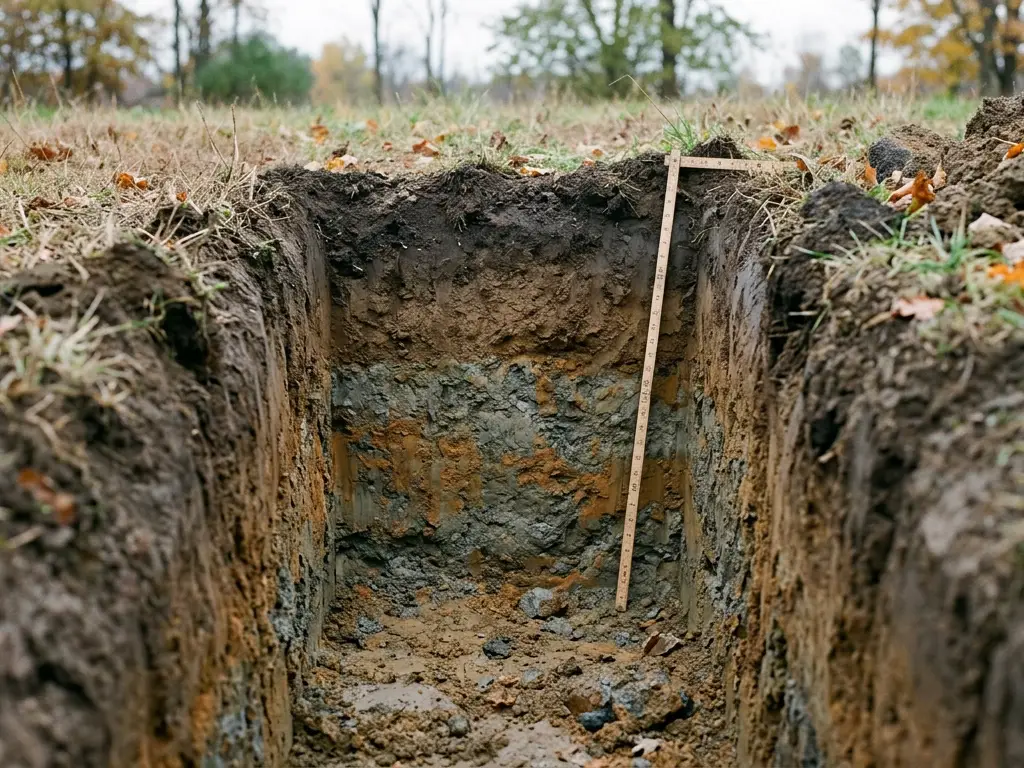
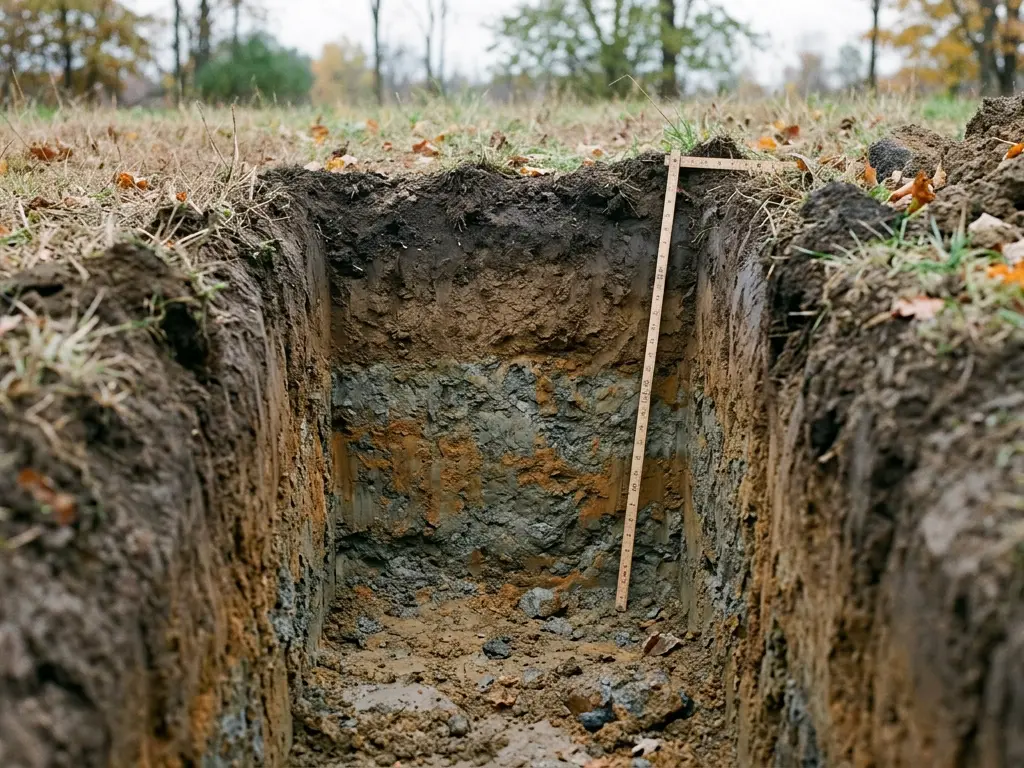
Buying a lot before a $400 perc test and deep hole can mean discovering the ground needs a $25,000 mound instead of an $8,000 conventional field, after the purchase is final.
$8,000 to $35,000 depending on the soil
New septic system installation around Syracuse typically costs $8,000 to $35,000. A Syracuse excavator's published ranges run from $8,000 to $15,000 for a conventional gravity system on good soil to $20,000 to $35,000 for an engineered system on a difficult site. Design typically adds $1,500 to $5,000, and perc testing $400 to $1,000.
Get a price: (315) 922-5458Questions to answer before buying or building
- Has anyone dug a deep test hole on the lot, and what did it show?
- Where is the seasonal high groundwater, and how deep is the rock?
- Is there room for the field, the setbacks and a reserve area?
- Is the lot in the Skaneateles or Otisco Lake watershed?
- Is there a public sewer close enough to change the plan?
How a new system gets designed
New York requires every new residential system, including conventional ones, to be designed by an appropriately licensed professional engineer or architect. The design starts with a site evaluation: test holes to find the seasonal high groundwater and any rock or impermeable layer, and percolation tests to measure how fast water moves through the soil.
The state standard, Appendix 75-A, then sets the limits. Useable soil percolates between one and sixty minutes per inch. A conventional field needs four feet of it above rock, unsuitable soil and high groundwater. Land below the ten-year flood level and slopes over fifteen percent are unacceptable for a system. The design flow is at least 110 gallons per day per bedroom.
Setbacks that shape the lot
Table 2 of the state standard sets minimum distances that decide where the house, the well and the system can go. Some of the ones that matter most on a new lot:
- Septic tank: 50 feet from a well, 10 feet from the house and the property line
- Absorption field: 100 feet from a well or a stream, lake or wetland, 20 feet from the house, 10 feet from the property line
- Seepage pit, where allowed: 150 feet from a well
- No absorption system under a driveway, a building or an above-ground pool
On a small lot with a private well, those distances can leave one workable spot for the field, which is exactly why it is found before the foundation is placed.
Not sure what the system needs? Describe what you are seeing and get a straight answer on what it usually takes.
Call (315) 922-5458When the lot needs more than a trench
Across much of this area the soil is rated very limited for conventional fields, mostly because of a high water table or slow water movement. The answer is usually a raised or mound system, a cut-and-fill design where a tight layer sits over better soil, or a shallow trench. In the Skaneateles and Otisco Lake watersheds, Onondaga County has its own permit application for new construction.
North of the city, in towns like Cicero and Hastings, expect the groundwater to drive the design. South of it, in Onondaga and Camillus, slope and slow till are the usual constraints.
About to buy a building lot
Make the purchase conditional on a deep hole and perc test. Call to line up testing and a design professional; the result decides the system, the budget and sometimes where the house goes.
Call (315) 922-5458Questions people ask
How much does a new septic system cost near Syracuse?
Typically $8,000 to $35,000. Conventional systems on good soil run about $8,000 to $15,000; engineered systems about $20,000 to $35,000.
Does a new septic system need an engineer in New York?
Yes. Every new residential system must be designed by a licensed professional engineer or architect.
What are the signs a lot is hard to build a septic system on?
Mottled grey soil or water in a shallow test hole, rock close to the surface, slopes over fifteen percent, or ground that floods.
How big a septic tank does a new house need?
At least 1,000 gallons for one to three bedrooms, 1,250 for four, 1,500 for five and 1,750 for six.
How far does a septic field have to be from a well?
At least 100 feet under the state standard, and 50 feet for the tank.
Often done together
-
Perc tests and soil testing
Measuring how fast water moves through the soil and how deep the good soil goes, before anything is designed.
-
Mound and raised systems
Lifting the absorption field above ground that cannot treat wastewater on its own, built in fill that has to be placed and tested properly.
-
Septic tank replacement
Swapping a rusted, cracked or undersized tank for a properly sized concrete one, without touching a field that still works.
Talk it through before anyone digs
Say what the house is doing, how old the system is and when the tank was last pumped. You will hear what the job usually involves, what it tends to cost, and whether it needs digging at all.
Call (315) 922-5458