
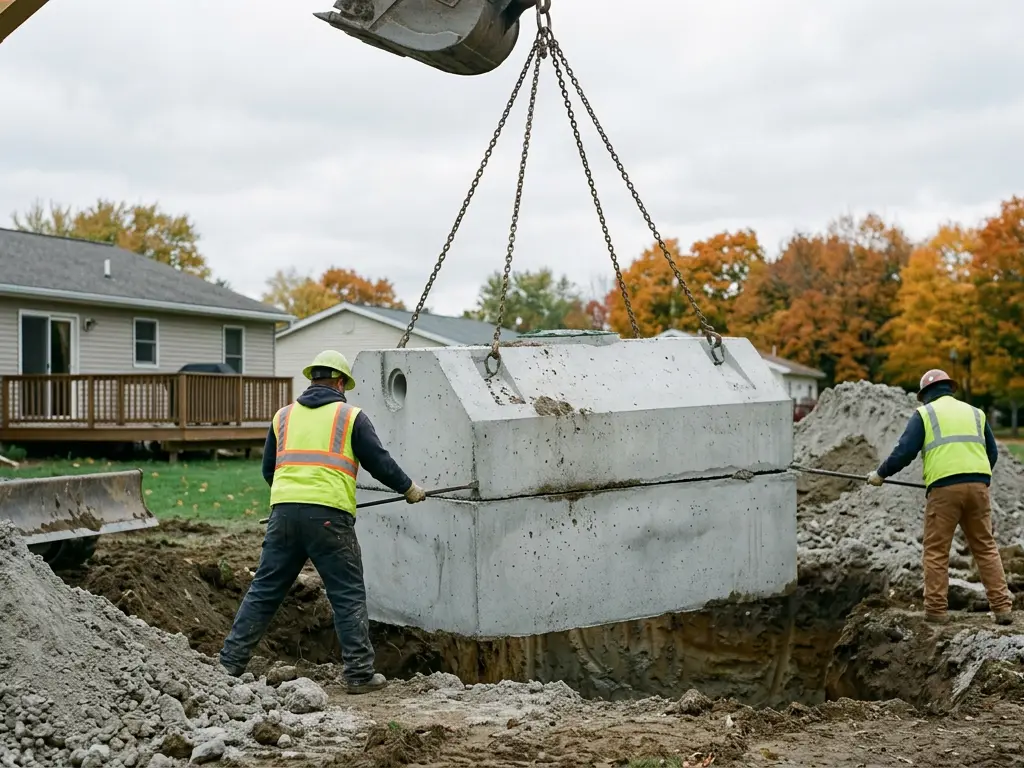
Full replacements, designed and permitted
Syracuse Septic Pros Septic System Replacement in Syracuse
Tank, distribution box and absorption field replaced together when the old system is past saving.
- Syracuse and ten towns within 20 miles
- Written price before any digging
- Licensed, insured local contractors
- Built around Onondaga County soils
Syracuse Septic Pros arranges complete septic system replacements for homes around Syracuse through local excavation crews and licensed design professionals. A full replacement is the right call when the tank and the field have both failed, when the old system was never built to anything like today's standard, or when a house has grown beyond what the old system can treat.
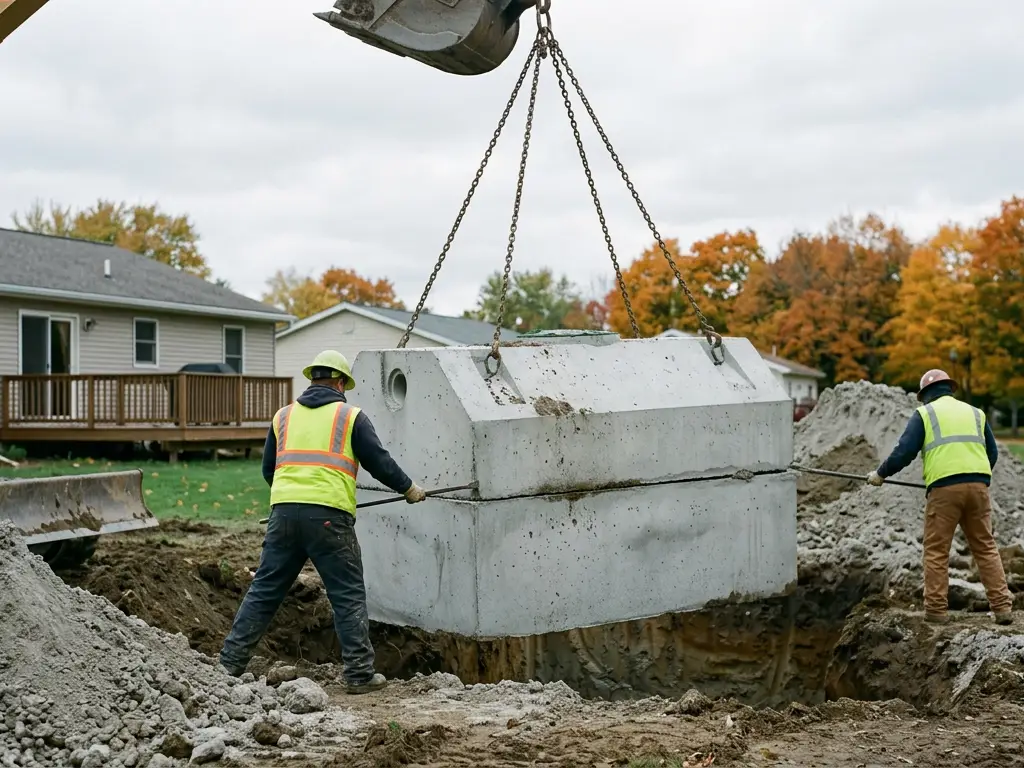
Patching a steel tank and an undersized field one crisis at a time can cost $3,000 a year in pump-outs and emergency repairs, while a designed $8,000 to $28,000 replacement ends the cycle.
$8,000 to $28,000 depending on the system
A septic system replacement around Syracuse typically costs $8,000 to $28,000. A Syracuse excavator publishes $8,000 to $15,000 for a tank, field or full conventional replacement and $22,000 to $28,000 for an engineered mound replacement on a high water table site. The soil the lot has decides which end of the range a job lands on.
Get a price: (315) 922-5458Signs the whole system is due
- A steel tank, or a tank no one can find a record of
- Backups and surfacing effluent at the same time
- A system that predates the house additions, with more bedrooms now than it was built for
- A failed inspection during a sale
- Repairs every year for several years running
What a full replacement includes
A replacement is designed as one system: a new tank sized to the bedroom count, a distribution box, and an absorption area sized to the soil. Under New York's standard, new designs use at least 110 gallons per day per bedroom, and tanks start at 1,000 gallons for one to three bedrooms. Older homes with older fixtures are designed for more flow, 130 or 150 gallons per bedroom.
The design is prepared by a NYS licensed professional engineer or architect, reviewed by the county health department, and inspected before backfill.
Which county reviews it
Most of this service area is in Onondaga County, where the Health Department's Division of Environmental Health handles septic review. Homes in Hastings are in Oswego County, where engineers submit four sets of plans to the county Health Department with a plan review fee, $125 for an individual system. Homes in Sullivan are in Madison County, whose public health department reviews alternative system designs and observes percolation and deep hole tests.
Crews that work across the three counties know the differences, and the contractor you are connected with should be able to say which office will review your job and what it asks for.
Not sure what the system needs? Describe what you are seeing and get a straight answer on what it usually takes.
Call (315) 922-5458The state replacement fund
New York's State Septic System Replacement Fund, created by the Clean Water Infrastructure Act of 2017, reimburses up to 50 percent of eligible costs to a maximum of $10,000, or up to 75 percent to $25,000 for enhanced treatment systems. Design, installation and system components are eligible. Routine pump-outs, permit fees, sales tax and connecting to a public sewer are not.
Eligibility is set by the county and limited to properties near specific waterbodies. In Onondaga County that means within 250 feet of Skaneateles Lake and its tributaries, Otisco Lake, the Seneca River between the Cross Lake outlet and Klein Island, Jamesville Reservoir, or Upper Rush Creek. Madison and Oswego counties take part for their own listed waters.
Choosing the system
Where the soil allows, a conventional trench field is the cheapest and simplest. Where it does not, the design moves to a raised or mound system, a shallow trench, or an engineered design. Across much of Onondaga County the soil ratings make that second list the likely one, and it is better to hear that at the first visit than after the perc test.
House under contract and the system failed
Replacement is a design, a review and a build. Call early and say what the inspection found. A contractor can tell you the realistic timeline and what can be done to keep the house usable meanwhile.
Call (315) 922-5458Questions people ask
How much does it cost to replace a septic system in Syracuse?
Typically $8,000 to $28,000. Conventional replacements run about $8,000 to $15,000; engineered mound replacements about $22,000 to $28,000.
Will New York help pay for a new septic system?
Some homes near listed waterbodies qualify for the state fund, up to 50% of eligible costs to $10,000, or 75% to $25,000 for enhanced systems.
What are the signs my septic system needs replacing?
Backups and surfacing effluent together, a steel or unknown tank, a failed inspection, and repairs year after year.
Who approves a septic replacement near Syracuse?
The county health department: Onondaga for most of the area, Oswego for Hastings, Madison for Sullivan.
Does a septic replacement need an engineer?
Yes for a new system. New York requires designs by a NYS licensed professional engineer or architect.
Often done together
-
Leach field replacement
When the soil under the old trenches has given up, a new field in the right place, built to the state standard.
-
Septic tank replacement
Swapping a rusted, cracked or undersized tank for a properly sized concrete one, without touching a field that still works.
-
Mound and raised systems
Lifting the absorption field above ground that cannot treat wastewater on its own, built in fill that has to be placed and tested properly.
Talk it through before anyone digs
Say what the house is doing, how old the system is and when the tank was last pumped. You will hear what the job usually involves, what it tends to cost, and whether it needs digging at all.
Call (315) 922-5458