Water and septic tests on one lot
Syracuse Septic Pros: Well and Septic Inspection in Syracuse, NY
Testing the private well and the septic system together, because on most rural lots the one sits within a few hundred feet of the other.
- Syracuse and ten towns within 20 miles
- Typical prices published for every job
- Onondaga, Oswego and Madison county rules explained
- Hire licensed, insured local contractors
- Ask for a written price before work starts
Syracuse Septic Pros is a referral website for well and septic inspections in Syracuse and the surrounding towns. Plenty of homes outside the city draw water from their own well and send wastewater to their own septic system on the same lot, so a test of one says little about the other. Hire licensed, insured local contractors for the septic side.
Skipping a $425 water and septic test on a house with a private well can leave the new owner with a well nobody has sampled and a field that turns out to need an $8,000 to $15,000 replacement.
Two Systems on One Lot Outside the City
Most of Syracuse itself is on public sewer. Septic systems sit throughout the towns, from the lake plain to the hills of Onondaga, and some of those houses also draw from a private well. The septic system treats wastewater in the ground; the well draws water from the ground. A combined inspection looks at both and at how they sit relative to each other.
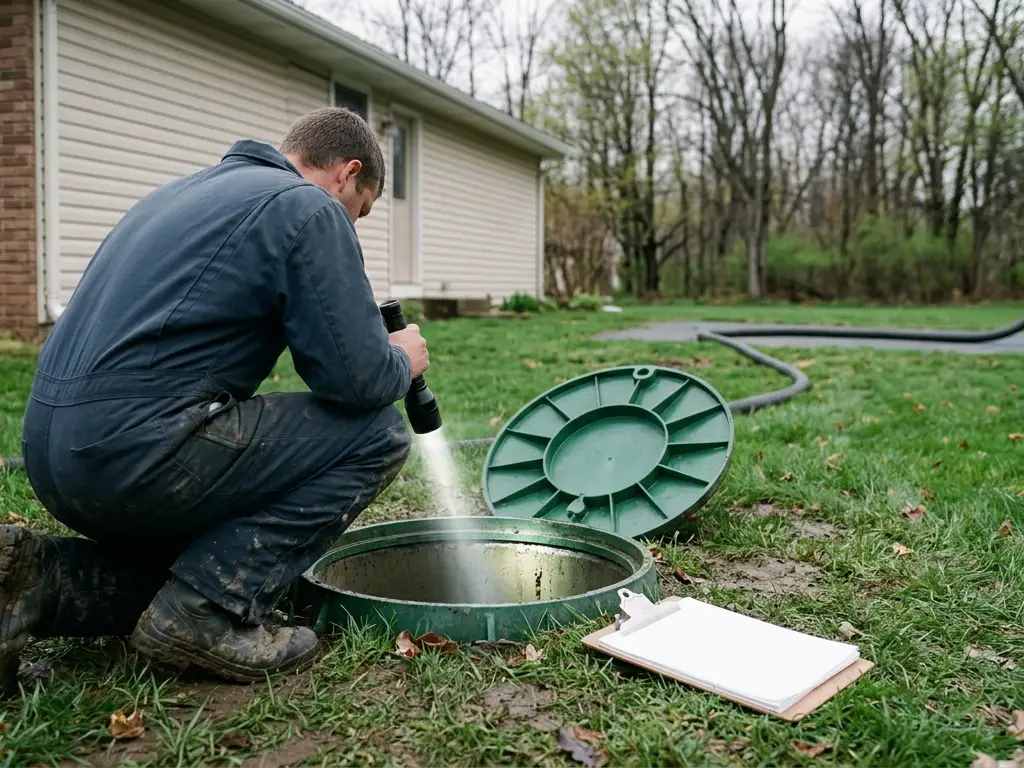
On the septic side, EPA's list of what a proper inspection covers starts with the paperwork and goes into the tank:
- Permit, design and pumping records reviewed
- Every tank opened, with sludge and scum levels measured
- The effluent filter, baffles and pipes checked for leaks or backup
- Pumps, controls and wiring, where the system has them
- The distribution box and the leach field
Pricing the Water and Septic Pieces
Typical range: $225 to $425 for the tests
Well and septic testing around Syracuse typically runs $225 to $425. Watkins Environmental Sciences, a Central New York engineering firm, publishes $425 for a combined water, septic and flow test, and $225 each for a dye test alone, a water purity sample alone or a two-hour well yield test. A lead, nitrate and nitrite sample adds $110. Ask for a written price before work starts.
Call (315) 922-5458The price depends on which pieces are bundled. A combined water, septic and flow test is the published package; a buyer who wants only the water sampled, or only a septic dye test, pays for that piece. Lead, nitrate and nitrite analysis sits on top. A full pump-and-inspect visit with a camera is a bigger job, priced on the septic inspection page at $375 to $1,075.
For Hastings, Oswego County's Health Department runs its own realty tests: a septic dye test over four days with written results for $230, a realty water test for coliform and E. coli for $90, a full enhanced water test for $150 and a lead, nitrate and nitrite test for $70.
How Often to Test Each Side
The New York State Department of Health says to test a private well at least once a year for E. coli and coliform bacteria, and every three to five years for lead, nitrate and nitrite, arsenic, sodium, iron, manganese and other contaminants. Late spring or early summer is the best time to sample.
The septic side runs on a different clock: a pump-out every two to three years by the state's figure, or three to five by EPA's, with the tank looked at each time. EPA notes that many states require a septic inspection when property changes hands, though no New York or county page says one is required at sale here.
Checking the Distance From Well to Field
Appendix 75-A, the state's residential standard, sets the minimum separation between a well and each part of a septic system. An inspector who has both on the plan can check them against the table:
- Septic tank: 50 feet from the well
- Distribution box and leach field: 100 feet
- Seepage pit: 150 feet
- House sewer: 25 feet if cast iron, 50 feet otherwise
- Any part of the system upslope of a well in the path of its drainage: 200 feet
Older systems were often built before the current standard took effect in 2016, so a short distance is a finding to understand rather than a failure in itself. Ask what the distance means for the water results.
Signs a Property Needs Both Tested
- The house has its own well and its own septic tank
- Nobody can say when the well water was last sent to a lab
- The water tastes, smells or looks different than it used to
- The leach field sits uphill of the well
- Soggy ground or bright green grass over the field
- You are buying and the seller has no water results to hand over
Schedule a Well and Septic Inspection in Syracuse
Buying a house on a well and septic? Find out where both are before the visit, from the seller or the property file, so the water sample and the septic test fit one visit.
Call (315) 922-5458Background reading: Septic Costs Around Syracuse and What to expect at a septic inspection.
Frequently Asked Questions
Well and Septic Inspection Questions From Syracuse Homeowners
How much does a well and septic inspection cost near Syracuse?
Typically $225 to $425. One Central New York engineer lists $425 for a combined water, septic and flow test and $225 for each test alone, with $110 more for lead and nitrate.
How far does a septic system have to be from a well in New York?
At least 50 feet for the tank, 100 feet for the leach field and distribution box, 150 feet for a seepage pit, and 200 feet if the system is upslope in the well's drainage path.
What are the signs a well and septic system are too close?
A leach field uphill of the well, a measured distance under the state minimums, or bacteria in the water test.
How often should well water be tested?
The state Department of Health says at least once a year for E. coli and coliform bacteria, and every three to five years for lead, nitrate and other contaminants.
Is a well and septic test required to sell a house in Onondaga County?
No state or county rule read for this page says so. Buyers and lenders may still ask for one, so check the purchase contract.
Is a well and septic inspection the same as a septic inspection?
No. A septic inspection looks only at the wastewater system. A well and septic inspection adds a water sample and often a flow test.