
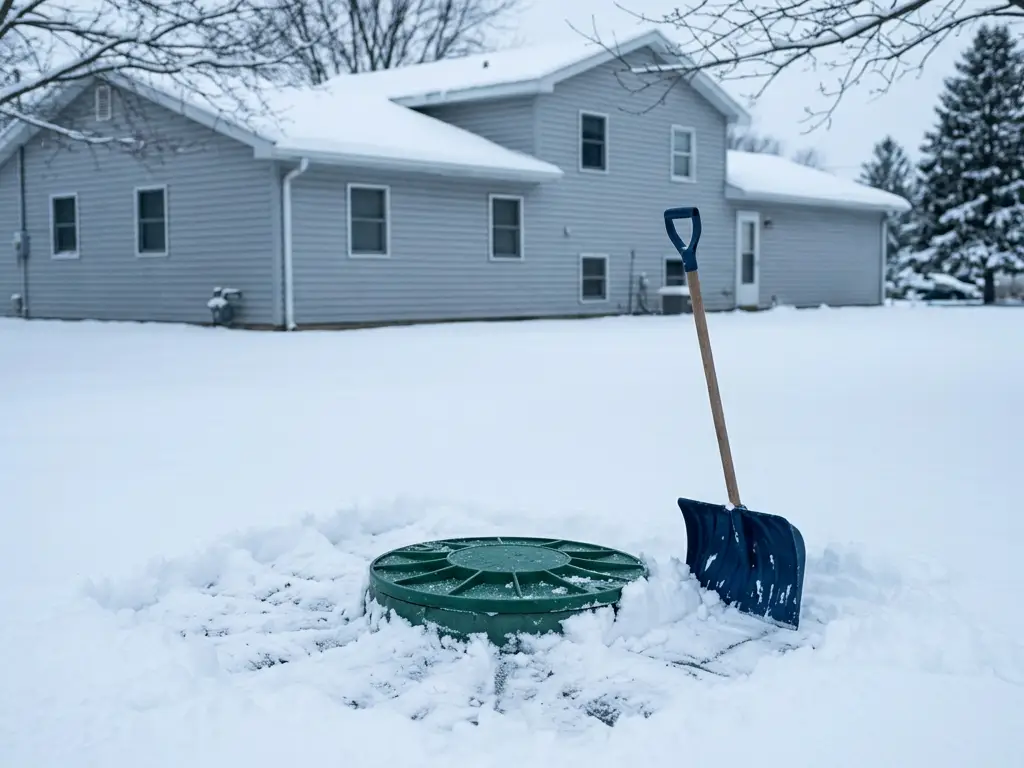
Lids at grade for Onondaga County tanks
Syracuse Septic Pros: Septic Tank Risers in Syracuse, NY
A watertight collar from the tank opening up to the lawn, with a lid that locks, so nobody digs to reach the tank again.
- Syracuse and ten towns within 20 miles
- Typical prices published for every job
- Onondaga, Oswego and Madison county rules explained
- Hire licensed, insured local contractors
- Ask for a written price before work starts
Syracuse Septic Pros is a referral website for septic tank risers in Syracuse and the towns around it. A riser is a watertight extension, usually plastic, that brings a tank opening from a foot or more underground up to the surface. In a place where the lids spend the winter under frozen ground and lake-effect snow, it is one of the cheapest upgrades a system can get. Hire licensed, insured local contractors, and have the riser fitted while the tank is open.
A buried lid adds $50 to $150 of digging to every pump-out, while one riser at $300 to $900 installed ends that charge for the life of the tank.
What a Riser Does on a Buried Tank
A tank lid set a foot or two below the lawn is invisible until someone probes for it. The riser bolts or seals to the tank opening and rises to the surface, where a heavy or locking lid caps it. From then on a pumper opens the main manhole without a shovel, and the inlet and outlet baffles can be seen on every visit.
New York's residential standard, Appendix 75-A, already asks for this on new work. Its rules for access:
- Septic tank covers shall always be accessible
- A manhole more than 12 inches below final grade gets an extension collar over each opening
- A collar brought flush with the surface needs a cover that locks against tampering
- Openings at least 20 inches across on tanks 48 inches deep or more, 12 inches on shallower tanks
- A distribution box no more than 12 inches down, or collared to within 12 inches of the surface
What Sets the Price of a Riser
Typical range: $300 to $900 per riser installed
A septic tank riser around Syracuse typically costs $300 to $900 installed. SepticTankHub, a cost directory, puts professional installation at $300 to $600 a riser, and Backwell, a Syracuse excavator, lists $400 to $900 a riser on an existing tank in Central New York. A two-compartment tank may need one on each opening. Ask for a written price before work starts.
Call (315) 922-5458Depth is the main variable: a lid two feet down needs a taller riser than one a foot down. Material matters less than the seal. The number of openings decides how many risers a tank needs, and a tank nobody can find adds time before anything is fitted; the directory figure for locating is another $50 to $250. A kit bought alone runs about $100 to $300, but the sealing to the tank is the part that decides whether it works.
If the tank cannot be found at all, start with septic tank locating, which covers records, probing and line tracing. The Syracuse septic cost guide lists the riser band with its sources.
The Best Moment to Add One
The tank already has to be dug out for a scheduled septic tank pumping, so that visit is the obvious time: the hole is open and the lid is exposed. Late autumn, before the ground freezes, is the other good window, since the next winter visit then starts at the lid, which counts for most in snow country such as Hastings, north of the Oneida River.
The New York State Department of Health tells owners to map the tank and its components or mark them with permanent stakes, and not to build a deck or patio that limits access to the tank. A riser does both jobs in one fitting.
Sealing Risers Against Snowmelt and Groundwater
A riser is only an improvement if it stays watertight. In Clay, USDA sampling found a saturated zone close to the surface at 22 of 25 points, and a leaking joint there lets spring groundwater and snowmelt run straight into the tank, filling it with water that then has to go somewhere. Ask how the riser will be sealed to the tank, not just how it will look.
Cold is the other risk. The University of Minnesota's septic program warns that an open, broken or uncapped riser lets cold air into the system and can help it freeze, and North Dakota State University calls insulating around risers and manholes especially important on new systems. A riser lid in this climate should be intact, tight and never left open; the guide to frozen septic systems covers the rest of winter care.
Signs the Tank Needs a Riser
- Every pump-out bill includes time spent digging for the lid
- The lids sit under lawn, garden beds or a patio edge
- Nobody in the house could point to the tank in winter
- A stake or a map is the only way anyone finds the tank
- The tank has two compartments and only one opening ever gets pumped
Schedule Septic Tank Riser Installation in Syracuse
Tank due for a pump-out anyway? Ask for the riser on the same visit. The digging is already paid for, and the lid comes up to grade before the ground freezes.
Call (315) 922-5458Background reading: Septic Costs Around Syracuse and How Often to Pump a Septic Tank.
Frequently Asked Questions
Septic Tank Risers Questions From Syracuse Homeowners
How much does a septic riser cost near Syracuse?
Typically $300 to $900 per riser installed. A cost directory puts installation at $300 to $600, and a Syracuse excavator lists $400 to $900 on an existing tank.
Does New York require a septic riser?
The state standard says tank covers must always be accessible, and a manhole more than 12 inches below final grade gets an extension collar over each opening.
What are the signs a septic riser is leaking?
Soggy ground or settling around the lid, and a tank that fills faster than the household's water use explains, especially in spring.
How many risers does a septic tank need?
One for each opening that needs access. A two-compartment tank may need two.
Can a riser lid sit flush with the lawn?
Yes, if the cover locks against tampering. That is the condition the state standard sets for a flush collar.
Do septic risers help in winter?
They put the lid above frozen ground and snow, so it can be shoveled off and opened. Keep the lid intact and closed so cold air stays out.