
Pumping intervals for Central New York homes
Syracuse Septic Pros Guide to How Often to Pump a Septic Tank in Syracuse
Every three to five years is the rule of thumb. Here is how to work out where your house falls, and when in the year to do it.
- Syracuse and ten towns within 20 miles
- Written price before any digging
- Licensed, insured local contractors
- Built around Onondaga County soils
Syracuse Septic Pros wrote this guide because how often to pump is the most common septic question there is, and the honest answer is that it depends on the tank, the household and the habits of the people using it. The usual rule of thumb is every three to five years. This guide explains how to tell which end of that range fits your house, and why the time of year matters in Central New York.
What pumping actually removes
A septic tank separates what comes out of the house into three layers: a scum layer of grease and light solids floating on top, liquid in the middle that flows on to the field, and sludge that settles on the bottom. Bacteria break down some of the solids, but not all of them. The sludge and scum keep building, and when they get close to the outlet, solids start flowing into the field, which is the expensive part to replace.
Pumping removes the sludge and scum before that happens. It is maintenance, not a repair, and no additive does the same job.
Working out your interval
The tank size and the load on it decide the schedule. Things that shorten it:
- More people in the house than the tank was sized for
- A garbage disposal, which adds a lot of solids
- Heavy laundry, especially many loads on one day
- A smaller or older tank; New York now requires at least 1,000 gallons for up to three bedrooms
- Guests and seasonal peaks, such as a lake camp full every summer weekend
Things that lengthen it are the opposite: fewer people, no disposal, spread-out laundry, a larger tank. A two-person household on a 1,250 gallon tank may reasonably go five years; a family of five with a disposal on a 1,000 gallon tank may need three or less.
Not sure what the system needs? Describe what you are seeing and get a straight answer on what it usually takes.
Call (315) 922-5458Let the tank tell you
The best schedule is the one based on measurement. At each pump-out, ask how thick the sludge and scum layers were. If the tank was nowhere near full after four years, you can stretch the next interval. If it was close to the outlet after three, shorten it. After two or three pump-outs you will know your own house's number.
The best time of year to pump around Syracuse
Late summer and autumn
The easiest time. The ground is dry and open, lids are easy to reach, and if something needs a repair there is time before the freeze. If the tank is due any time in the next winter, pumping in October beats pumping in January.
Winter
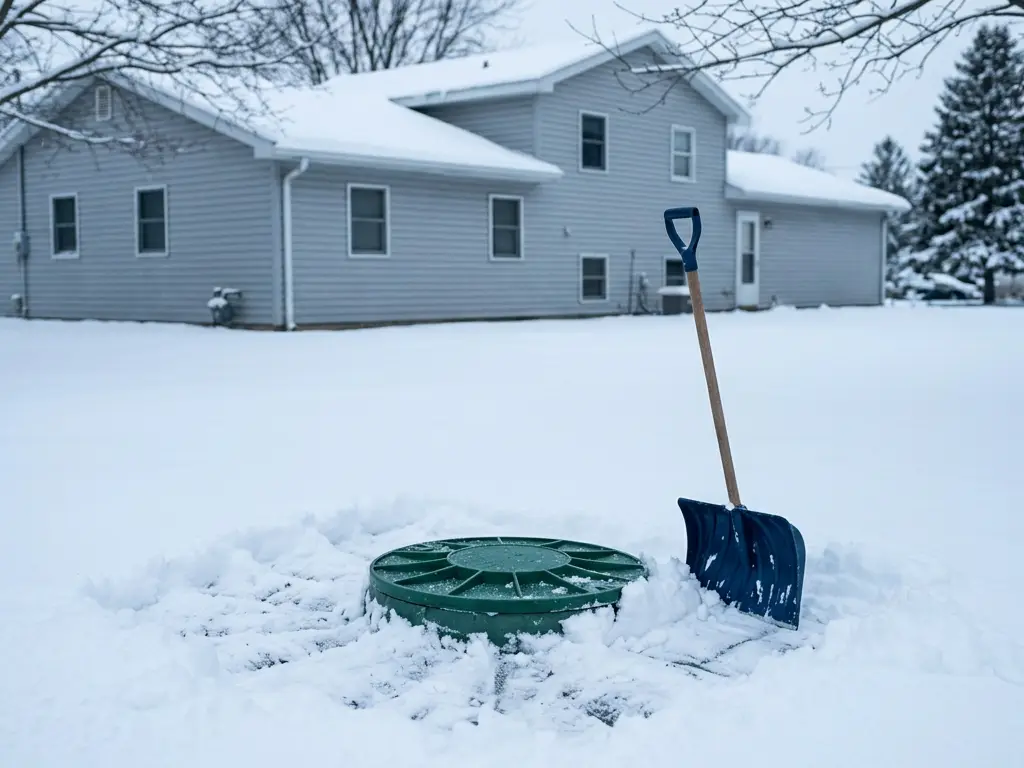
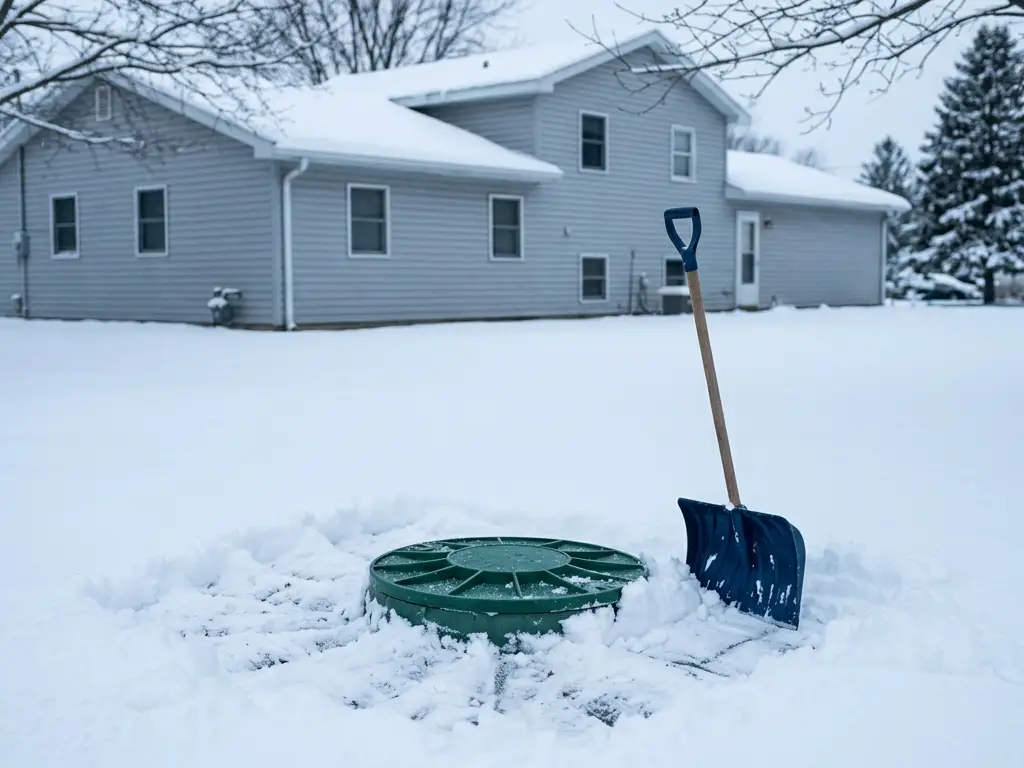
It can be done, but lids under frozen ground and lake-effect snow take time to reach. A riser that brings the lid to the surface helps a lot, and the tank locating page explains how.
Spring
Useful for diagnosis, less ideal for routine pumping. On wet ground, a field that is struggling shows it in spring, and a pumper who sees water flowing back from the field is telling you something. But a tank pumped when the ground is saturated can also float or take on groundwater if it is not watertight.
Seasonal and lakefront homes
Around Oneida Lake, in Cicero, Hastings and Sullivan, many properties are camps or seasonal homes. A system that sits idle for months and then carries a full house every weekend fills on the busy months' schedule, not the calendar year's. Pump before the season starts rather than after it ends, so the tank goes into its heaviest use empty.
Keeping a record
The single most useful thing a homeowner can do is write down each pump-out: the date, the company, the tank size, how thick the sludge and scum layers were, and anything the crew noticed about the baffles or the field. Keep it with the house papers. After a few visits it tells you your real interval, and when the house is sold it answers the first question every buyer and inspector asks.
If you have just bought a house and there is no record, pump the tank in the first year. It resets the clock, it shows you where the lid is, and it gives you a first look at the condition of the tank before any problem forces the issue.
Not sure what the system needs? Describe what you are seeing and get a straight answer on what it usually takes.
Call (315) 922-5458Signs the schedule is wrong
If the crew reports the tank nearly full to the outlet every time, the interval is too long. If backups or slow drains show up between pump-outs, something else is going on, a baffle, a blocked filter or a struggling field, and pumping more often will only hide it. And if the tank is always well short of full, you may be pumping more often than you need to, which is money you can keep.
Pumping and the leach field
Pumping protects the field, but it cannot fix one. If the crew sees water pouring back into the tank from the field once it is empty, pumping more often will not help for long; the field is saturated. That is a different conversation, about why the field is struggling and whether it can be repaired.
What a pump-out costs
A standard pump-out around Syracuse typically runs $325 to $600 for a 1,000 to 1,250 gallon tank. Buried lids, long hose runs and larger tanks push toward the top of the range. Against a field replacement that typically costs $8,000 to $15,000, it is the cheapest insurance a septic system has. More detail is on the septic tank pumping page.
Questions people ask
How often should a septic tank be pumped?
Every three to five years is the usual starting point, adjusted for tank size, household size and use.
What are the signs my septic tank needs pumping now?
Slow drains across the house, gurgling after the washer drains, odor near the tank and unusually green grass over it.
What is the best time of year to pump a septic tank in Syracuse?
Late summer or autumn, before the ground freezes and snow covers the lids.
Do septic additives mean I can pump less often?
No. Additives do not remove the sludge that builds up; only pumping does.
How much does septic pumping cost near Syracuse?
Typically $325 to $600 for a standard 1,000 to 1,250 gallon tank.
Talk it through before anyone digs
Say what the house is doing, how old the system is and when the tank was last pumped. You will hear what the job usually involves, what it tends to cost, and whether it needs digging at all.
Call (315) 922-5458