
Nine expensive habits
Syracuse Septic Pros Guide to Septic Mistakes That Cost Syracuse Homeowners
The habits that turn a few hundred dollars of maintenance into a field replacement, and what to do instead.
- Syracuse and ten towns within 20 miles
- Written price before any digging
- Licensed, insured local contractors
- Built around Onondaga County soils
Syracuse Septic Pros collected these because the same handful of mistakes sits behind most expensive septic jobs around Syracuse. None of them are exotic. Most are habits that seem harmless for years, until the leach field, the part that costs thousands to replace, gives out.
1. Waiting for a problem before pumping
By the time drains slow down, solids may already have been flowing into the field for a while. Pumping on a schedule, usually every three to five years, costs $325 to $600. A field ruined by solids costs $8,000 to $15,000 to replace, and more on wet ground.
2. Treating additives as maintenance
Additives do not remove sludge. Some claim to, and some can push solids along toward the field. The only thing that removes what settles in a tank is a pump truck.
Not sure what the system needs? Describe what you are seeing and get a straight answer on what it usually takes.
Call (315) 922-54583. Flushing the wrong things
Wipes, including those labelled flushable, paper towels, feminine products, grease and cooking oil do not break down in a tank. They build the scum layer, clog the effluent filter and, if the baffles fail, end up in the field.
4. Running all the laundry on one day
A tank needs time to let solids settle. Eight loads on a Saturday pushes water through faster than it can, and floods the field with more than it is designed to take at once. On slow-draining soils, like the till around Camillus and Van Buren, spreading laundry through the week makes a real difference.
5. Sending roof and surface water onto the field
Downspouts, sump pump discharge and driveway runoff aimed at the field saturate it from above. New York's standard requires surface water to be diverted away from a septic system for exactly this reason. Redirecting a downspout is one of the cheapest septic fixes there is.
6. Driving, parking or building on the field
Vehicles crush pipes and compact the soil the field depends on. The state standard does not allow an absorption system under a driveway, a building or an above-ground pool, and the same logic applies to a truck parked on the lawn. Keep sheds, patios and play sets off it too.
Not sure what the system needs? Describe what you are seeing and get a straight answer on what it usually takes.
Call (315) 922-54587. Planting trees near the tank or field
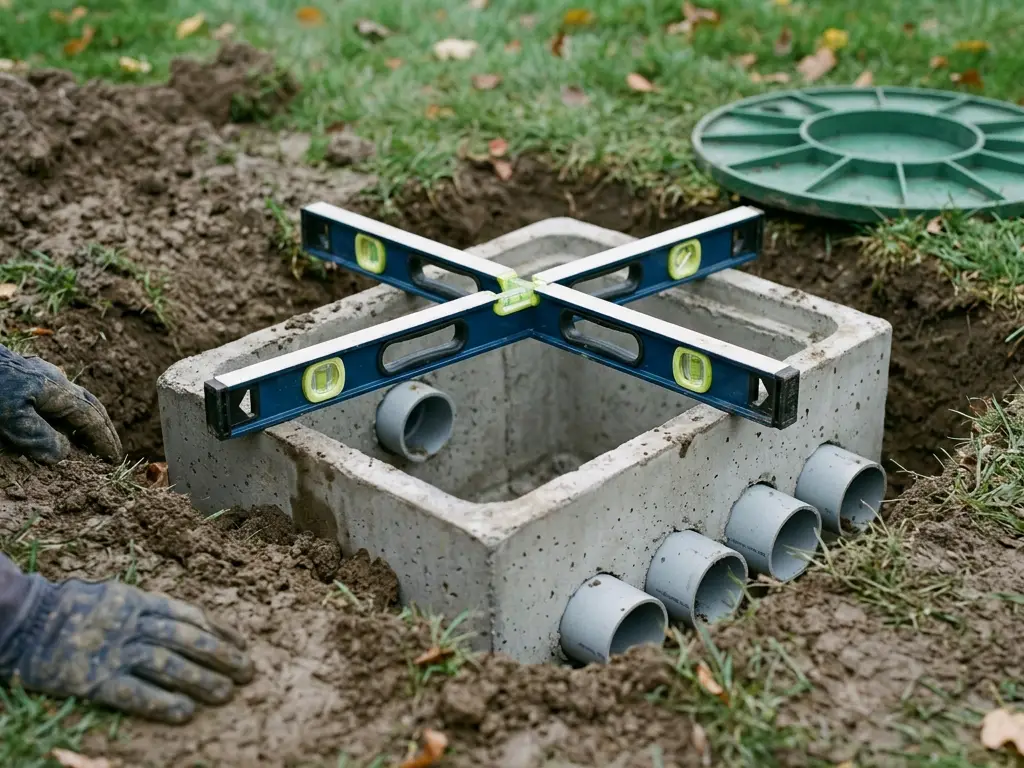
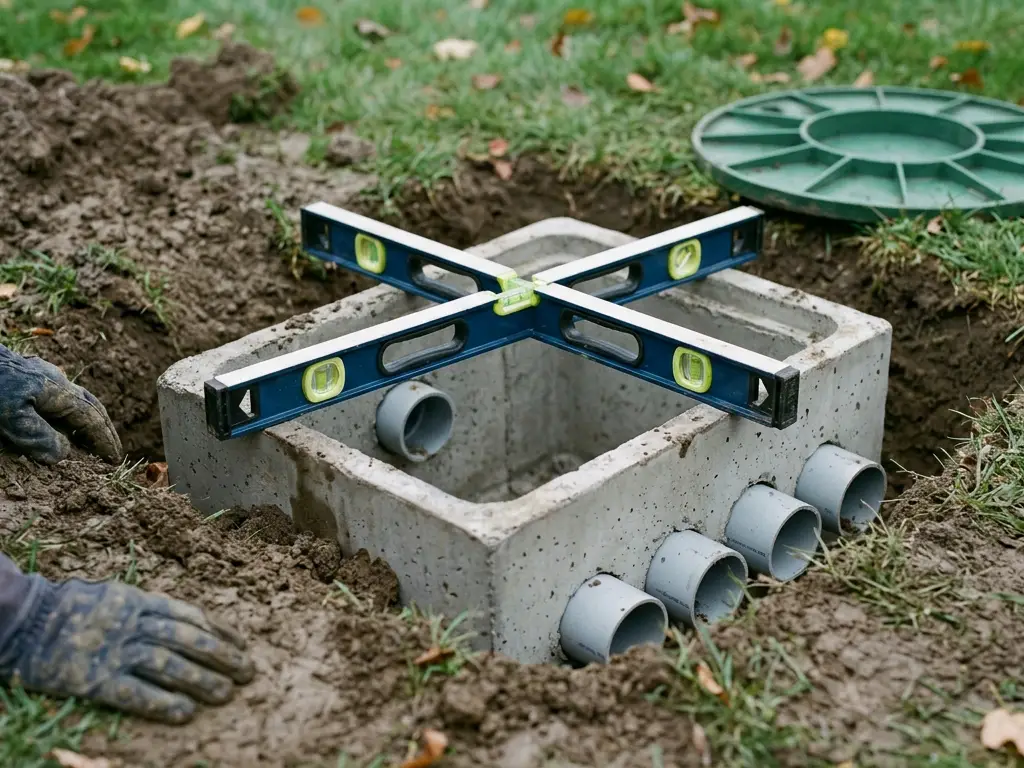
Willows, maples and other thirsty trees send roots into pipes and distribution boxes. Grass is the right cover for a field.
8. Losing track of where the tank is
A buried lid nobody can find turns every pump-out into a search, and in a Syracuse winter a search under frozen ground and snow. A riser fitted during a pump-out typically costs $300 to $900 and saves that time on every future visit.
9. Replacing a failed field with a copy of the old one
The field that failed in a wet spot will fail again in the same wet spot. Around Syracuse, where USDA soil ratings are very limited for conventional fields at most sampled points, a replacement needs to be designed for the soil that is actually there, which often means a raised system. Cutting that corner saves money once and costs it twice.
Mistakes buyers make
Two more are worth adding for anyone buying a house on septic. The first is relying on a dye test alone. A dye test run on a vacant house in dry weather can pass while the tank is full of sludge and the field floods every spring. A pump-out and inspection that opens the tank and checks the field tells you far more for a few hundred dollars more.
The second is not asking how many bedrooms the system was designed for. New York sizes tanks and fields by bedrooms, and a house that has added bedrooms since the system went in may be running on a system too small for it. That matters for how often it needs pumping, and it matters again if the new owners plan an addition, because a bedroom addition needs an evaluation by a licensed design professional.
Mistakes after a problem appears
When something does go wrong, the costly reactions are pouring in drain cleaner, which can harm the tank and field, and waiting to see whether it clears up. A backup that clears on its own has usually just moved the problem further along. Cut water use, get the tank opened, and find the cause while it is still small, when the fix is usually a part rather than a new field.
Mistakes with a pumped or raised system
Homes with a pump chamber, common on raised systems around Syracuse, have one more way to go wrong: silencing the alarm and forgetting about it. The alarm means the chamber is filling faster than the pump can empty it. The reserve above the alarm is measured in hours of normal use. Cut water use, check the breaker, and get the pump or float looked at before the chamber overflows back toward the house.
What good habits look like
- Pump on a schedule, and ask the crew how full the tank was
- Fix running toilets and dripping taps; every gallon goes to the field
- Spread laundry and dishwasher loads through the week
- Keep roof water, vehicles and trees away from the field
- Know where the tank lid is, and fit a riser if it is buried
- Have small problems, like a broken baffle, fixed while they are small
If one of these mistakes has already happened, the fix may still be small. The septic repair page covers the jobs that stop a problem before it reaches the field.
Questions people ask
What is the most expensive septic mistake?
Letting solids reach the leach field, usually by skipping pump-outs or ignoring a broken baffle.
Are flushable wipes safe for septic systems?
No. They do not break down in the tank and can clog filters and pipes.
What are the signs I have been overloading my septic system?
Slow drains and gurgling after heavy laundry days, and soggy ground over the field after big water use.
Can I park on my septic field?
No. Vehicles crush pipes and compact the soil. New York does not allow absorption systems under driveways.
How much does it cost to fix a septic system damaged by these mistakes?
From $200 to $400 for a baffle to $8,000 to $15,000 for a field ruined by solids.
Talk it through before anyone digs
Say what the house is doing, how old the system is and when the tank was last pumped. You will hear what the job usually involves, what it tends to cost, and whether it needs digging at all.
Call (315) 922-5458