Syracuse Septic Pros: Septic Pumping vs Cleaning in Syracuse
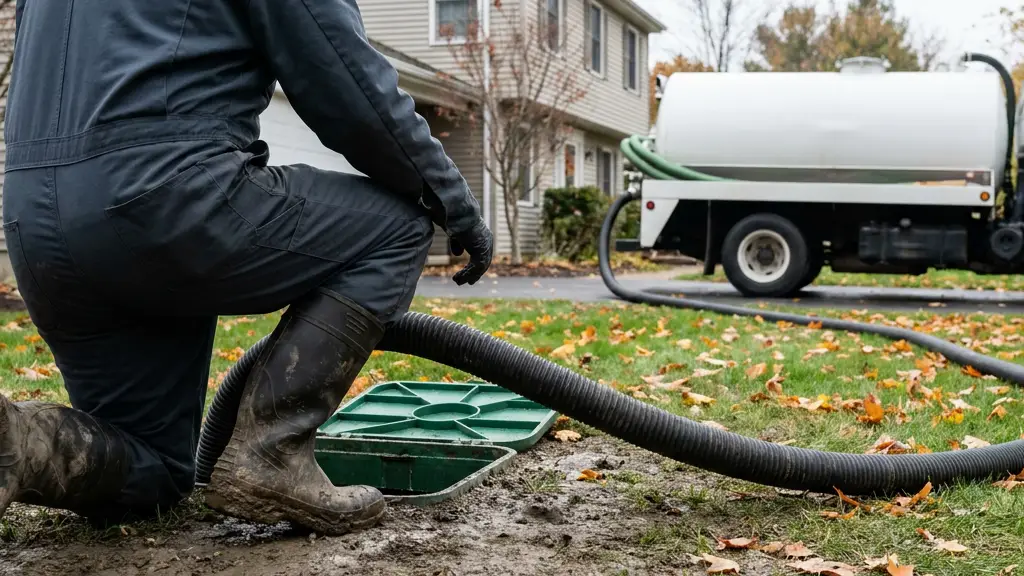
Syracuse Septic Pros is a referral website for septic service in Syracuse and the surrounding towns, and the difference between pumping a septic tank and cleaning one is quickly settled: around here they are almost always the same visit. What is worth knowing is what that visit should include, which parts genuinely are cleaning, and which similar-sounding jobs are something else.
One Job Under Two Names
Every government source on septic care says pump. The New York State Department of Health tells owners to have the tank pumped out every two to three years and calls the hauler a septage waste transporter. EPA says tanks are typically pumped every three to five years. None of them describes septic cleaning as a separate service.
Cost directories agree. SepticTankHub, which surveys pumping prices, says people searching for cleaning and for pumping are usually after the same thing: a vacuum truck emptying the tank. So a quote for septic tank cleaning and a quote for a pump-out are the same job. Compare what each includes.
Inside a Proper Pump-Out
A tank holds three layers: scum floating on top, sludge on the bottom, and clearer liquid between them that flows on to the leach field. Pumping removes all three, through the main manhole where the hose can reach the sludge, not a small inspection port that leaves most of it behind.
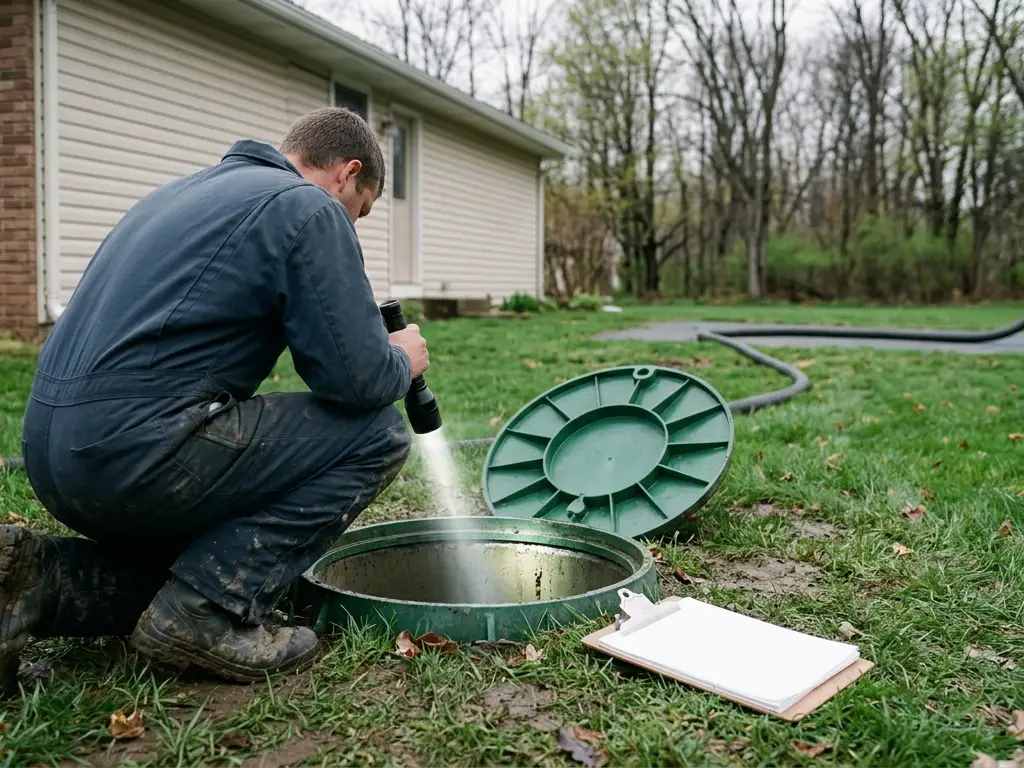
An empty tank is also the best view of the system. Ask about:
- Inlet and outlet baffles, since a missing outlet baffle lets solids reach the field
- Both compartments emptied on a two-compartment tank
- Water running back from the field into the empty tank, a sign of a saturated field
- Cracks, roots or groundwater seeping in
Ask for the sludge and scum depths to be written down. Over two or three visits they show how fast your household fills its tank.
The Parts of a Visit That Really Are Cleaning
One piece of a septic visit is cleaning in the ordinary sense: the effluent filter, a screen at the outlet that holds back fine solids. EPA notes these filters may need frequent maintenance. Where one is fitted, it is pulled and rinsed with the lid open; SepticTankHub prices filter cleaning at $50 to $100 on top of the pump-out.
Anything beyond that, such as clearing a blocked pipe between the house and the tank, is a repair and should be priced as one. The septic backup page covers that kind of job.
How to Tell a Tank Is Due
The state health department says every two to three years; EPA's guide says three to five. EPA also gives measurable triggers: pump when the bottom of the scum layer is within 6 inches of the outlet, the top of the sludge is within 12 inches of it, or sludge and scum fill more than a quarter of the liquid depth.
Tank size sets the pace. Appendix 75-A, the state's residential standard, requires at least 1,000 gallons for one to three bedrooms, 1,250 for four and 1,500 for five, and counts a garbage grinder as an extra bedroom. The how often to pump guide works through intervals by household. A tank due in midwinter is usually easier to reach in autumn, before the ground freezes.
Prices for a Pump-Out and the Extras
Typical ranges around Syracuse. A cleaning quote and a pumping quote should both land in the first row.
| Job | Typical range | Where it comes from |
|---|---|---|
| Pump-out, standard 1,000 to 1,250 gallon tank | $325 to $600 | FindSeptic puts Onondaga County at $325 to $500; larger or harder tanks sit above |
| Effluent filter cleaning | $50 to $100 added | SepticTankHub |
| A buried lid dug out | $50 to $150 per visit | SepticTankHub |
| Septic tank riser installed | $300 to $900 per riser | SepticTankHub (low end) and Backwell (local high end) |
| Effluent pump replaced | $1,200 to $2,500 | Backwell, a Syracuse excavation company |
None of these businesses is linked from this site. A pump-out price far above the first row should come with a reason: a large tank, a long hose run, or a lid two feet down.
Comparing a cleaning quote with a pumping quote? Give the tank size and when it was last pumped, and ask what the visit includes.
Call (315) 922-5458
Call (315) 922-5458Pumping a Tank Is Not Replacing a Septic Pump
The word pump causes a second mix-up. Raised systems and mounds often push effluent to the field with an electric pump in a separate chamber; Appendix 75-A requires pressure distribution on every mound and an alarm on every pump chamber. When that pump fails, the job is septic pump installation, an equipment repair, not a pump-out. If an alarm is sounding, start with alarm and pump repair.
EPA says pumps and controls usually need replacing every 10 to 20 years, and that systems with pumps should generally be inspected once a year. On the lake plain in Clay and Lysander, where a saturated zone is the leading soil limitation, ask whether the system has a pump chamber and have it checked when the tank is pumped.
Who May Haul Septage in New York
Pumping is regulated even though cleaning is not a defined term. New York requires a Part 364 waste transporter permit from the Department of Environmental Conservation for anyone hauling residential septage. Each truck carries a copy of the permit and shows the hauler's name and permit number on both sides and the rear, in characters at least three inches high.
DEC's page offers no public lookup of permitted haulers, so the lettering on the truck is the easiest check. Hire licensed, insured local contractors, and ask for a written price before work starts.
Cleaning Products That Do Not Replace a Truck
Some products are sold as septic cleaners or treatments. EPA does not recommend additives, and the state health department tells owners to avoid them. Sludge leaves a tank through a hose. Bacteria in a bottle do not remove it, and stirring solids up can push them toward the field, the expensive part to replace.
For the visit itself, see septic tank pumping, which covers tank sizes, winter access and what moves the price. If the empty tank shows water running back from the field, the next page is leach field repair.
Sources
- EPA, How to Care for Your Septic System: the three-to-five-year guide, the scum and sludge triggers, and yearly inspection for systems with pumps
- NYSDOH, Septic System Operation and Maintenance (publication 3208): pump out every two to three years; the pumper is a DEC-licensed septage waste transporter; avoid additives
- NYS Department of Environmental Conservation, Waste Transporters: the Part 364 permit for residential septage and the lettering each truck must carry
- EPA, Frequent Questions on Septic Systems: effluent filter maintenance, pump and control lifespans, and EPA's view of additives
- NYSDOH, 10 NYCRR Appendix 75-A, Wastewater Treatment Standards: Residential Onsite Systems (PDF): tank sizes by bedroom, pressure distribution on mounds, and alarms on pump chambers
Need septic work in the Syracuse area?
Hire licensed, insured local contractors, and ask for a written price before any digging starts.