Syracuse Septic Pros: How Long a Septic System Lasts in Syracuse
Syracuse Septic Pros is a referral website for septic work in Syracuse and the towns around it, and how long a system lasts sits behind the expensive decisions: repair or replace, and what to budget when buying a house with a tank in the yard. There is no single answer, but each part has a sourced number, and the ground around Syracuse explains why some systems reach it and others do not.
Why Nobody Publishes One Number
EPA says a system's life depends on its materials, design, installation, servicing, exposure and maintenance. The New York State Department of Health gives no figure at all: a system that is well located, designed, built and maintained serves for a long time, and even the best will eventually fail without maintenance.
A septic system is several parts with different lives, and the one that wears out first decides when the work starts.
Expected Life of Each Component
The figures with a published source behind them:
| Part | Typical life | Source |
|---|---|---|
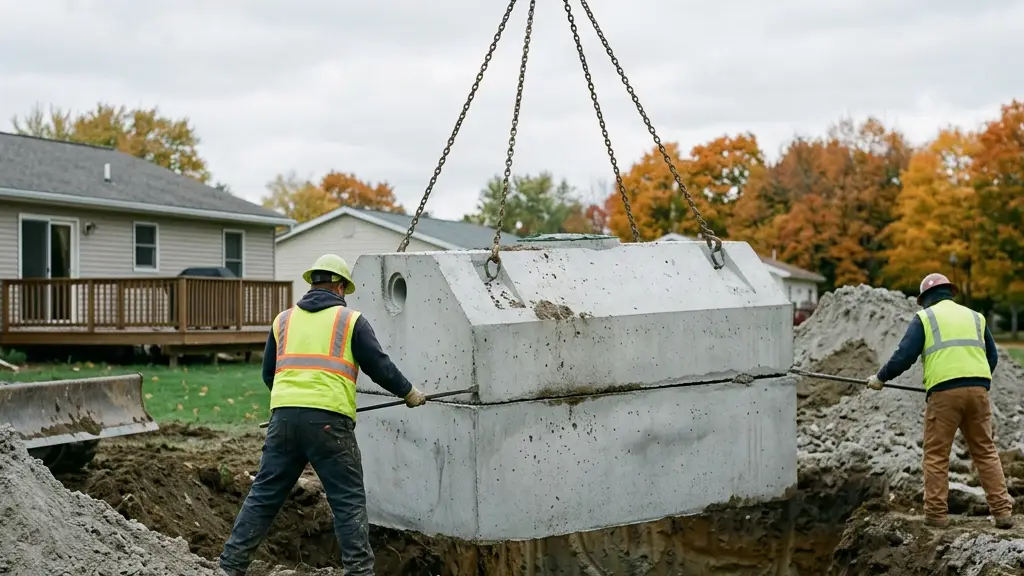
| Concrete tank | May last 50 years or more | EPA |
| Concrete tank | 40 years or more | Backwell, a Syracuse excavation company |
| Plastic tank | Similar to concrete | EPA |
| Effluent pump and controls | Replaced every 10 to 20 years | EPA |
| Leach field | Biomat problems possible after 25 to 30 years | EPA |
| Replacement leach field | 20 to 30 years with proper care | Backwell |
| Whole system | Likely near the end past 25 to 30 years | EPA |
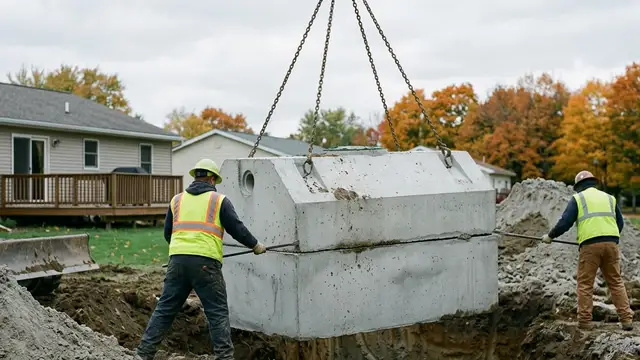
The tank usually outlives the field. When an old system fails, ask whether the tank is sound before pricing a whole new system; septic tank replacement and leach field replacement are separate jobs with separate prices.
What Wears a System Out Early
Most early failures trace back to a few habits and conditions:
- Skipped pumping, which lets solids out of the tank to clog the trench bottoms
- Too much water: leaking fixtures, laundry piled into one day, downspouts or a sump pump draining toward the field
- Weight on the field; the state standard bars absorption fields under driveways, buildings and above-ground pools
- Load the tank was not sized for, such as an added bedroom; Appendix 75-A counts a garbage grinder as one more bedroom
- Additives, which EPA does not recommend and the state health department says to avoid
How Local Soils Set the Clock
Around Syracuse the ground often matters more than the habits. Appendix 75-A, the state's residential standard, wants four feet of useable soil under a conventional field and at least two feet between the trench bottom and the highest groundwater. USDA soil ratings sampled at 25 points around each town show how rarely the ground offers that unaided:
- Cicero, south of Oneida Lake: 23 of 25 points very limited, with slow water movement and a saturated zone each counted 21 times
- Onondaga, in the hills south of the city: 19 of 25, with slow water movement at 22 and slope at 9
- Manlius: 21 of 25, with seepage at 11 and depth to bedrock at 9
USDA's description of very limited is blunt: without special design, expect poor performance and high maintenance. A conventional field on that ground tends to show its age first in spring, when the water table is highest.
Older Systems and the 2016 Standard
New York's current residential standard took effect on March 16, 2016. Older systems were built to earlier rules, and only the paperwork or an inspection shows how old yours is.
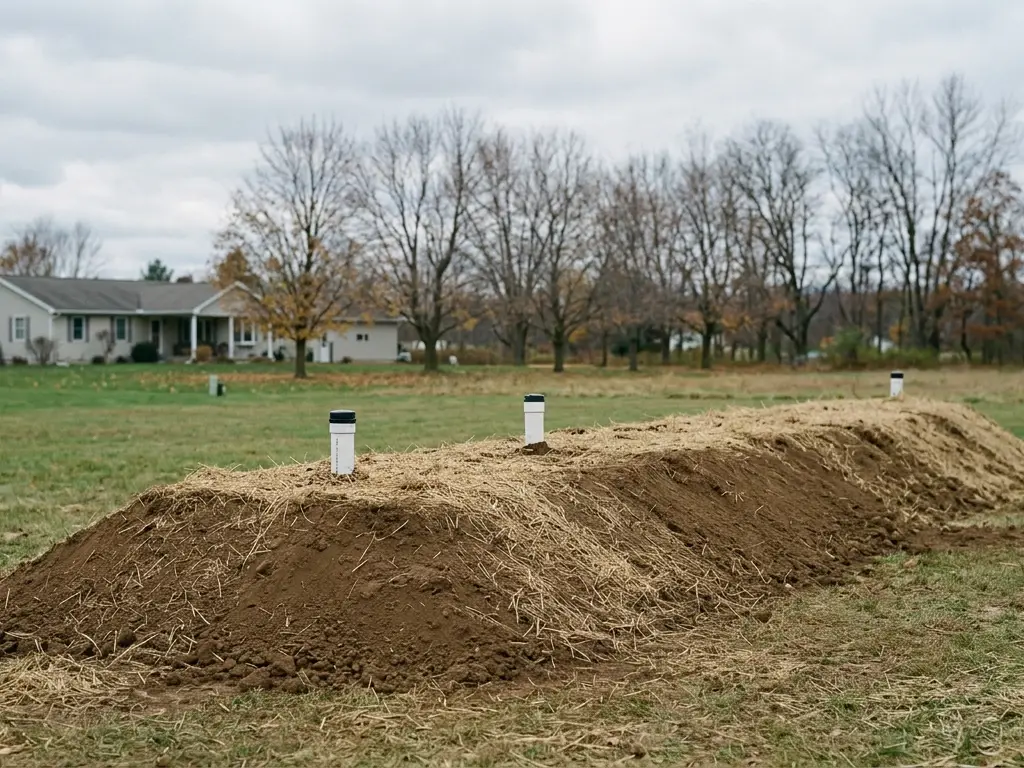
Two things follow. A replacement has to meet today's standard, which can mean a larger tank, a design by a licensed engineer or architect, or a raised field where the old one sat in the ground; the guide to mound vs conventional leach fields explains the difference. And the current tables still allow for older houses: design flow is 110 gallons per bedroom per day for new construction, 130 for fixtures from before 1994 and 150 for fixtures from before 1980.
Habits That Stretch the Years
Maintenance is the one lever an owner controls.
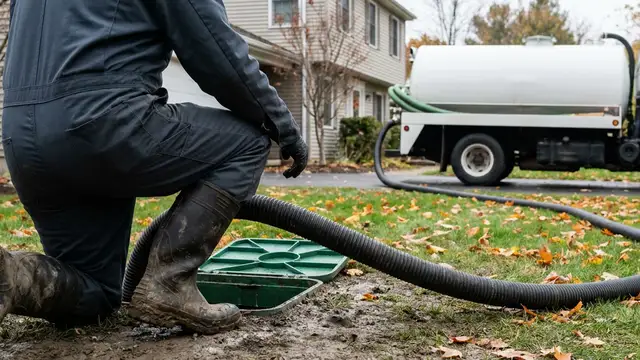
- Pump on the state's schedule of every two to three years, or EPA's three to five for a lightly used tank; septic tank pumping explains how size and household shift it
- Have the system inspected at least every three years, as EPA advises, and about once a year if it has a pump
- Spread laundry through the week and fix running toilets
- Keep downspouts and sump pump water away from the field
- Keep a record of every pump-out and repair, and a map of the tank and field, as the state health department recommends
Budgeting for the End of a System's Life
When a system does reach the end, the soil decides most of the cost. Backwell's March 2026 cost guide for Central New York gives these ranges:
| Replacement | Typical range | Where it comes from |
|---|---|---|
| Conventional gravity system | $8,000 to $15,000 | Backwell cost guide, March 2026 |
| Raised or mound system | $15,000 to $25,000 | Backwell cost guide, March 2026 |
| Engineered system | $20,000 to $35,000 | Backwell cost guide, March 2026 |
| Tank only, field still working | $3,000 to $6,000 | Backwell cost guide, March 2026 |
| Effluent pump replaced | $1,200 to $2,500 | Backwell repair page |
Backwell is named as a price source and is not linked. Homes within 250 feet of certain listed lakes and streams may qualify for the state Septic System Replacement Fund, which pays up to 50% of eligible costs, to a maximum of $10,000; the grant guide explains which waters count. The septic cost guide has the full set of ranges.
Planning for an old system, or buying a house with one? Give its age if you know it and what the yard is doing, and ask where it sits in these ranges.
Call (315) 922-5458
Call (315) 922-5458Judging the Age of a System You Are Buying
EPA suggests the deed, the building permit and the design plans as places to learn about a home's system. Ask the seller for pumping receipts and any as-built drawing.
Then have it opened. A septic inspection checks the tank and the field, and the home sale inspection guide walks through the visit. A system past 25 to 30 years with no records is the case EPA singles out for planning an upgrade, and that belongs in the negotiation.
If the system is old and you want to know where it stands, start with a septic inspection. If the field is already showing wear, the guide to signs your leach field is failing covers the symptoms, and septic system replacement covers the planning when the end has arrived.
Sources
- EPA, Frequent Questions on Septic Systems: tank, pump and drainfield lifespans, planning an upgrade past 25 to 30 years, and where to find a home's system records
- NYSDOH, Septic System Operation and Maintenance (publication 3208): a well built and maintained system serves for a long time; pump every two to three years; keep records
- NYSDOH, Appendix 75-A Wastewater Treatment Standards: Residential Onsite Systems: the current standard's March 16, 2016 effective date and its full text
- EPA, How to Care for Your Septic System: inspection at least every three years, yearly for systems with pumps, and the habits that protect the field
- USDA NRCS, Web Soil Survey: the septic absorption field rating and USDA's description of very limited soils
Need septic work in the Syracuse area?
Hire licensed, insured local contractors, and ask for a written price before any digging starts.