
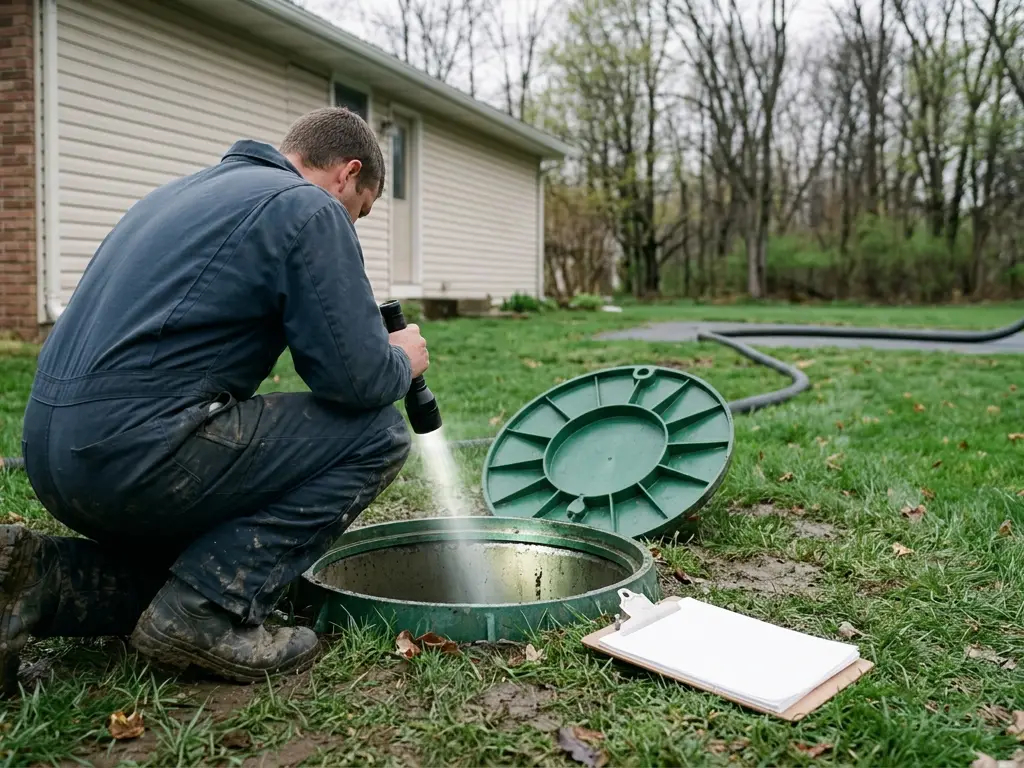
From booking to the written result
Syracuse Septic Pros Guide to What to Expect at a Septic Inspection in Syracuse
What happens when a septic crew comes to inspect a house for a sale, how long it takes and what you will get at the end.
- Syracuse and ten towns within 20 miles
- Written price before any digging
- Licensed, insured local contractors
- Built around Onondaga County soils
Syracuse Septic Pros wrote this for buyers and sellers who have never had a septic system inspected and are about to. Knowing what the visit involves makes it easier to book the right one, get the house ready, and understand what the report is telling you.
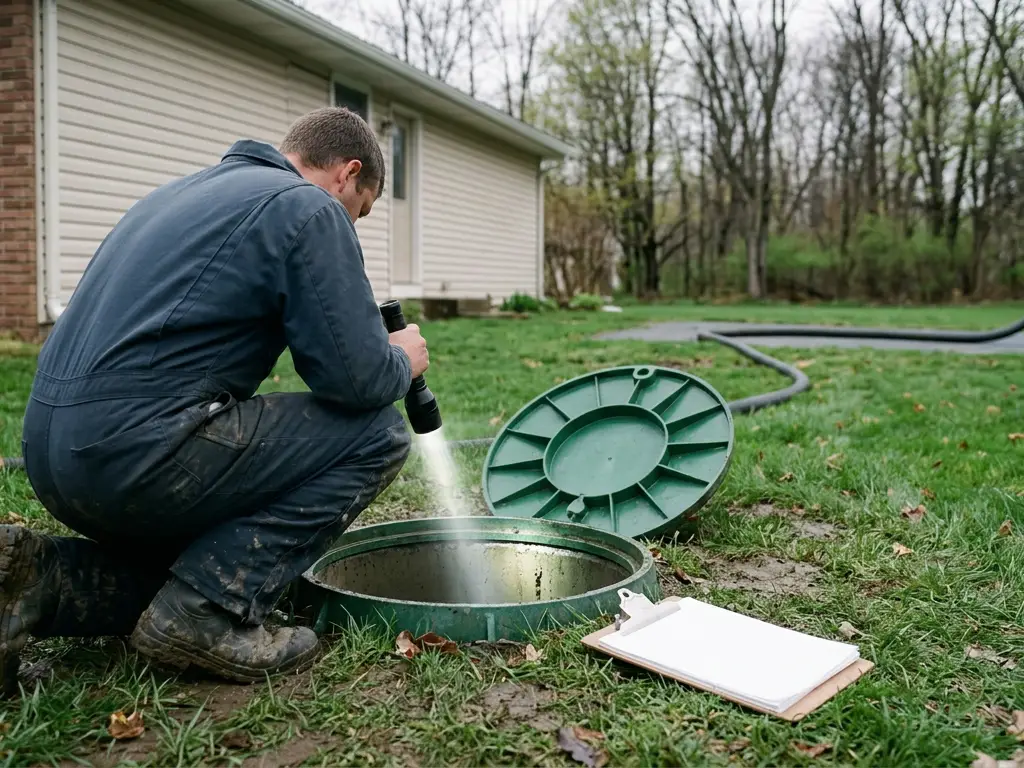
Before the visit
A little preparation saves time and money on the day:
- Find out where the tank is, or at least where the sewer line leaves the basement
- Gather any records: a county permit drawing, past pump-out receipts, the age of the system
- Tell the crew how many bedrooms the house has, since New York sizes tanks by bedroom count
- If the house has been vacant, say so; a system with no recent use tells you less on test day
- Clear access to the yard and move vehicles off the area over the field
Ask ahead whether the price includes pumping, and whether a written report comes with it.
On the day, step by step
- The crew locates the tank and exposes the lid or riser
- The liquid level is checked before pumping; a level above the outlet is a warning
- The tank is pumped through the main manhole so the walls, floor and baffles can be seen
- Inlet and outlet baffles are checked, and the effluent filter where there is one
- The crew watches whether water flows back into the empty tank from the field
- The distribution box is opened where it can be found, and checked for level and solids
- The field is walked and probed for saturation, surfacing effluent and settled trenches
- If a dye test is part of the job, dye and water are run through the house plumbing and the field and downslope ground are watched
A standard pump-and-inspect visit usually takes a few hours on site. Buried lids, frozen ground and a camera run add time.
Not sure what the system needs? Describe what you are seeing and get a straight answer on what it usually takes.
Call (315) 922-5458What a dye test adds, and what it cannot
Around Syracuse, dye tests are a common part of home sales. A dye test answers one question: does effluent surface or reach a ditch or drain on the day of the test. It does not show sludge depth, baffle condition, tank cracks, or a field that fails only when the water table is high. That last gap matters on the wet lake-plain ground north of the city. The septic dye test page covers when a dye test is enough and when it is not.
Reading the result
Minor findings
A baffle to replace, a lid to seal, a filter to clean, a tank smaller than the bedroom count now requires. Typically a few hundred dollars, or a note for the future.
Moderate findings
A tilted distribution box, a crushed line, surface water reaching the field. Often $500 to $5,000 and worth negotiating before closing.
Major findings
Surfacing effluent over the field, water flowing back as soon as the tank is pumped, a collapsing steel tank. These point to a replacement, typically $8,000 to $15,000 for a conventional field and more for a raised system, and they change a sale.
Buyers and sellers read it differently
A seller who inspects before listing gets to fix small things on their own schedule and hand buyers a clean report. A buyer who inspects during the contingency window gets leverage, but also a deadline. If the result points to a replacement, the next questions are what the soil will accept and who will design it, and that takes time to answer.
Around Manlius and the other towns where soil conditions vary from lot to lot, it is worth asking the inspector what they think the field is sitting in, not only whether it passed.
When the result is a surprise
Sometimes an inspection finds a system nobody expected: a steel tank, a cesspool, no distribution box, or a field that is not where the old drawing said. None of that is unusual in older houses around Syracuse, and none of it has to end a sale. It does mean the next step is a proper evaluation of what the lot will accept, and a price for the work, before the parties agree how to handle it.
Ask the inspector to write down exactly what was seen and where. A clear description, with the tank size, the condition of the baffles and what happened when the tank was pumped, is what a design professional or a contractor needs to price the fix quickly.
Not sure what the system needs? Describe what you are seeing and get a straight answer on what it usually takes.
Call (315) 922-5458Winter inspections
Inspections happen all year around Syracuse, but winter adds time and some uncertainty. Lids under frozen ground and snow have to be dug out, and a field covered in snow cannot be walked for wet spots. A dye test in deep winter can be hard to read. If the sale allows, a spring or autumn inspection gives the clearest picture; if it does not, say so when booking so the crew can plan for it.
After the inspection
Keep the written report with the house papers, along with any pump-out receipt. For a buyer, it is the baseline for everything that follows: when the tank will next need pumping, what to watch for, and what the system was like on the day you bought it.
Booking the right visit
For a sale, the stronger choice is a pump-out and full septic inspection with a dye test added, rather than a dye test alone. A full inspection typically costs $375 to $1,075 around Syracuse depending on scope, against a purchase price that may depend on the answer.
Questions people ask
How long does a septic inspection take?
Usually a few hours on site including pumping. Buried lids, frozen ground or a camera add time.
What happens during a septic inspection?
The tank is located, checked, pumped and examined; the baffles, distribution box and field are checked; and a dye test may be run.
What are the signs an inspection found a serious problem?
Surfacing effluent over the field, water flowing back into the tank after pumping, or a collapsing tank.
Should the seller or the buyer pay for the septic inspection?
Either can. Sellers who inspect before listing avoid surprises; buyers often order their own during the contingency.
How much does a septic inspection cost near Syracuse?
Typically $375 to $1,075 depending on scope, with pumping sometimes extra.
Talk it through before anyone digs
Say what the house is doing, how old the system is and when the tank was last pumped. You will hear what the job usually involves, what it tends to cost, and whether it needs digging at all.
Call (315) 922-5458