
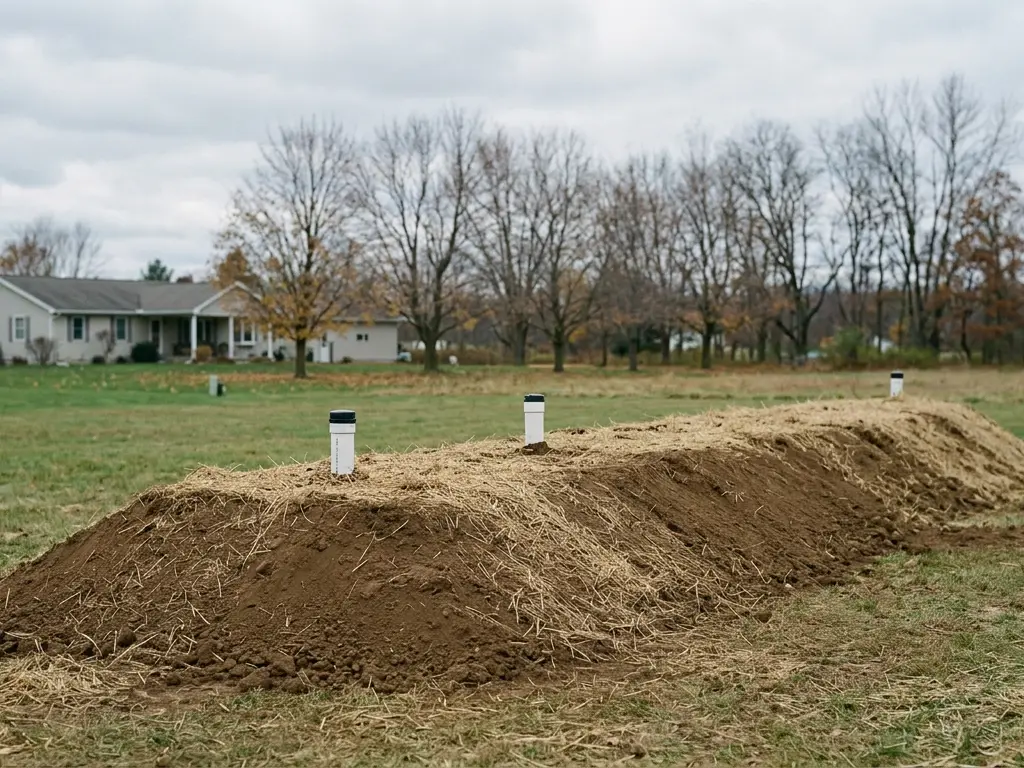
State money for failing systems near protected water
Syracuse Septic Pros Guide to the NYS Septic Replacement Grant for Syracuse
How the State Septic System Replacement Fund works, which homes around Syracuse can use it, and what it will and will not pay for.
- Syracuse and ten towns within 20 miles
- Written price before any digging
- Licensed, insured local contractors
- Built around Onondaga County soils
Syracuse Septic Pros wrote this guide because the one piece of septic news that can save a Syracuse-area homeowner thousands of dollars is also the least known. New York has a grant program for replacing failing septic systems, and several counties around Syracuse take part. It is narrow, it is decided by the county, and for the homes it covers it is worth up to $10,000.
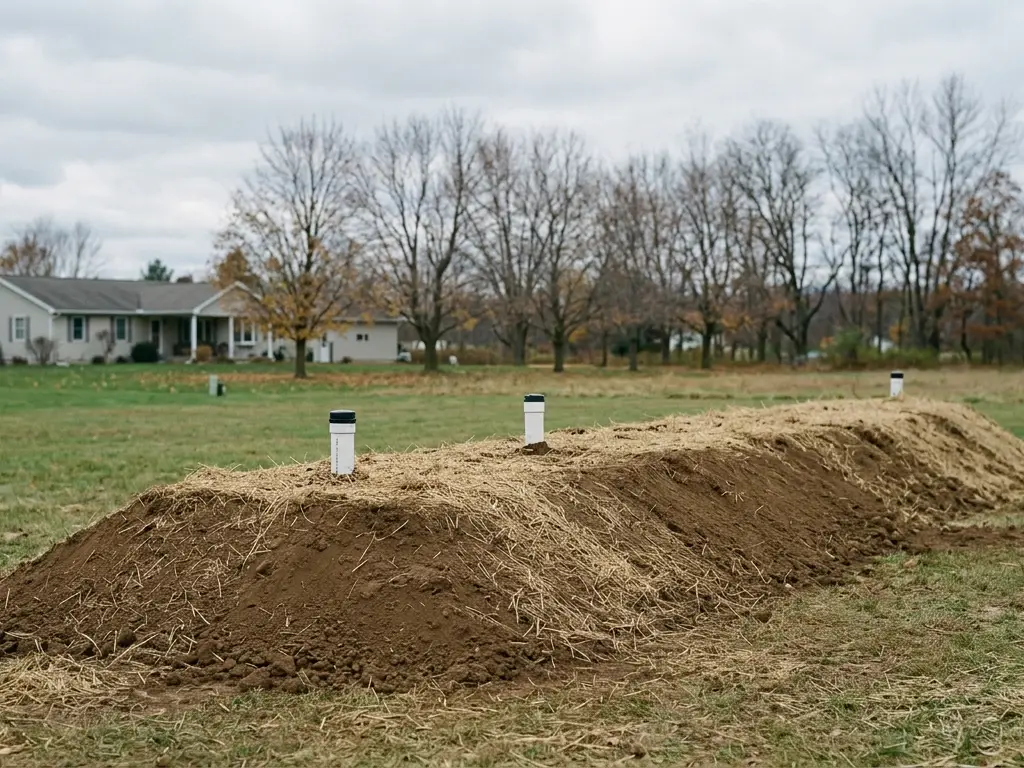
What the fund is
The State Septic System Replacement Fund was created by the Clean Water Infrastructure Act of 2017. It is run by the state Environmental Facilities Corporation with the Department of Environmental Conservation and the Department of Health, and delivered through participating counties.
Its purpose is water quality. The state identifies priority waterbodies, for example lakes that supply drinking water or waters impaired by septic effluent, and helps owners near them replace cesspools and failing or substandard septic systems.
How much it pays
Counties reimburse property owners for up to 50 percent of the eligible costs of a septic project, to a maximum of $10,000. For an enhanced septic system, such as one with advanced nitrogen removal, the limit is 75 percent of eligible costs to a maximum of $25,000. Counties may set graduated rates within those limits.
Against a Syracuse-area replacement that typically costs $8,000 to $28,000, that can be a large share of the bill.
Not sure what the system needs? Describe what you are seeing and get a straight answer on what it usually takes.
Call (315) 922-5458Who qualifies around Syracuse
Eligibility is by location and by the condition of the existing system. In Onondaga County, the Health Department asks three questions: is the property in Onondaga County; is it within 250 linear feet of one of the listed waterbodies; and does it currently have a substandard septic system or one in failure. The listed waterbodies are:
- Skaneateles Lake and its tributaries
- Otisco Lake
- The Seneca River between the Cross Lake outlet and Klein Island
- Jamesville Reservoir
- Upper Rush Creek and its tributaries
For this site's service area that points most directly at riverfront homes in Lysander and Van Buren along the Seneca, and homes near Jamesville Reservoir in DeWitt. Madison County takes part for Cazenovia Lake and upper Canastota Creek, and Oswego County for the Lake Ontario shoreline and upper Little Sandy Creek. The state's list of eligible waters was updated in July 2026.
What it covers and what it does not
Eligible
Replacing a cesspool with a septic system; installing, replacing or upgrading a septic system or its components; enhanced treatment technology; design and installation costs, the system and its components, and design work needed for the approved design.
Not eligible
Routine maintenance such as pumping; government permit fees; sales tax; interest, late fees, fines and penalties; non-essential landscaping or interior plumbing; the engineer's administrative work; and connecting to a public or community sewer. Costs that are not properly documented are not reimbursed either.
How to apply
- Check the property against the county's list: within 250 linear feet of an eligible waterbody
- Contact the county program. In Onondaga County that is the Health Department's public health engineering office, which handles septic questions
- Complete the county's application, describing the current system and its condition
- Wait for the county's eligibility decision and award letter before committing to work
- Have the replacement designed by a NYS licensed design professional and built to the approved design
- Keep every invoice. The fund reimburses documented eligible costs after the work
Do not start digging and apply afterward. The county decides eligibility and the award first.
If you do not qualify
Most homes around Syracuse are not within 250 feet of a listed waterbody, and for them the full cost of a replacement falls on the owner. The way to keep that cost down is the same as always: catch problems early, pump on schedule, keep water off the field, and get a design that fits the soil rather than a copy of the system that failed. The septic system replacement page covers what that involves, and the cost guide has the typical ranges.
It is also worth asking the county health department about other local programs. The state program points owners who are not eligible toward their county for anything else that may be available.
Not sure what the system needs? Describe what you are seeing and get a straight answer on what it usually takes.
Call (315) 922-5458What counts as a substandard or failing system
The county, not the contractor, decides whether a system is substandard or failing for the program. In practice the evidence is the kind a pump-out and inspection produce: effluent surfacing over the field, a system backing up into the house, a cesspool or steel tank, or a system that does not meet the separation distances or design standards it would need today. Getting a proper inspection written up before applying gives the county something concrete to evaluate.
If the house is being sold, the timing can be awkward. Talk to the county early, and make sure both sides understand who applies and who receives any reimbursement.
How long the process takes
Expect weeks rather than days between the first call to the county and the start of work. The application has to be reviewed, the system designed and the design approved, and a raised system may need its fill to stabilize before final sign-off. Plan around that, and use pump-outs to keep a failing system usable in the meantime; the pumping itself is not reimbursed.
Questions to ask a contractor about a grant job
- Have you built systems that were reimbursed under the state fund?
- Will your invoices separate eligible costs, like design and components, from ineligible ones, like permit fees?
- Who is the design professional, and will they prepare the plan the county needs?
- Can the work wait until the county has issued the award letter?
Questions people ask
How much will New York pay toward a new septic system?
Up to 50% of eligible costs to $10,000, or 75% to $25,000 for an enhanced system.
Does my Onondaga County home qualify for the septic replacement grant?
Only if it is within 250 linear feet of a listed waterbody and has a substandard or failing system. The county decides.
What are the signs a septic system counts as failing?
Surfacing effluent, backups, and a system that no longer treats wastewater as designed. The county evaluates the condition on application.
Does the grant pay for septic pumping?
No. Routine maintenance such as pumping, permit fees and sewer connections are not eligible.
Who do I contact about the grant in Onondaga County?
The Onondaga County Health Department, which runs the application for the county.
Can I apply after the work is done?
Apply first. The county decides eligibility and issues the award before the work is reimbursed.
Talk it through before anyone digs
Say what the house is doing, how old the system is and when the tank was last pumped. You will hear what the job usually involves, what it tends to cost, and whether it needs digging at all.
Call (315) 922-5458