
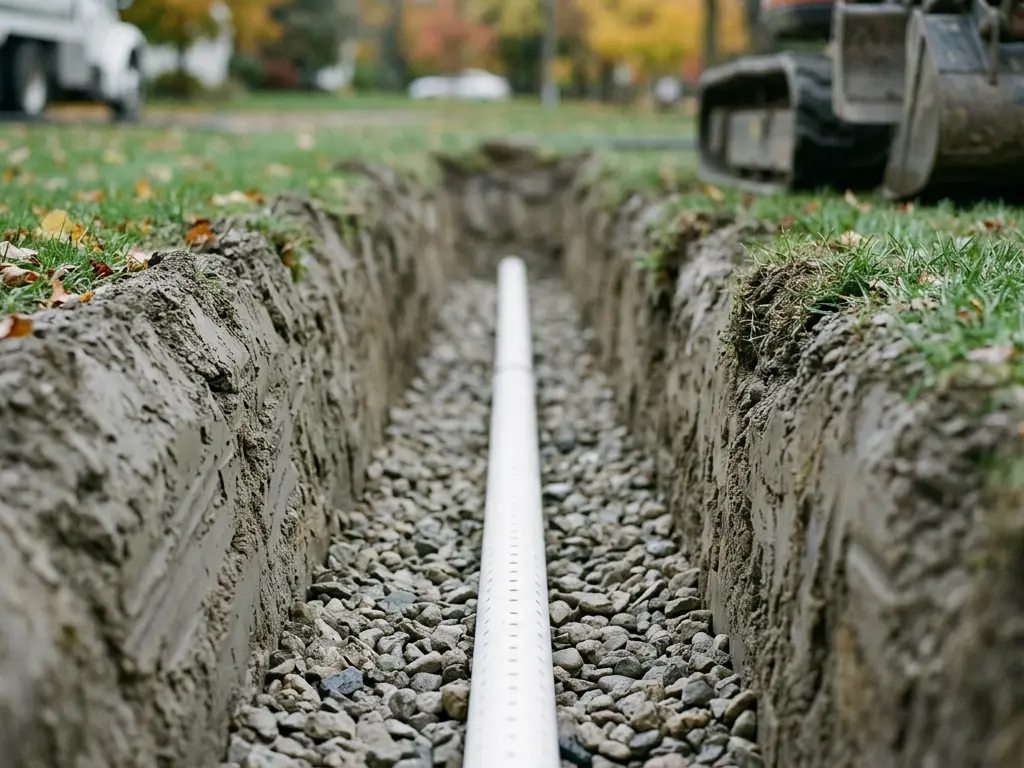
Reading what the house and the yard are telling you
Syracuse Septic Pros Guide to the Signs of Septic Failure in Syracuse
The symptoms of a failing septic system, in the order most homeowners notice them, and what each one usually points to.
- Syracuse and ten towns within 20 miles
- Written price before any digging
- Licensed, insured local contractors
- Built around Onondaga County soils
Syracuse Septic Pros put this guide together because septic systems fail slowly and then all at once, and the slow part is when the problem is cheapest to fix. Around Syracuse the ground adds its own twist: on much of the land around the city, a field can look healthy for half the year and fail the other half.
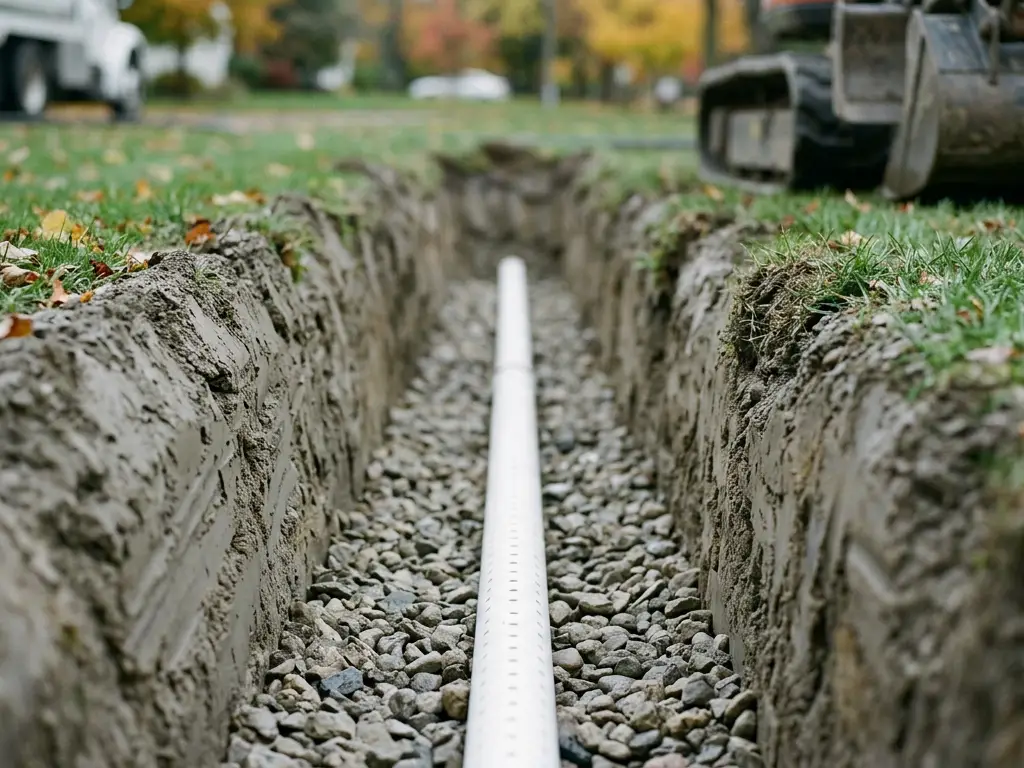
Signs inside the house
Every drain slow at once
One slow sink is a clog. Every fixture slowing together points to the system: a full tank, a blocked outlet or a field that is not taking water.
Gurgling after the washer drains
Air being pushed back up the pipes as a slug of water tries to get into a tank or field that is already full.
Water in the lowest drain
A basement floor drain or a first-floor shower filling when a toilet is flushed means water has nowhere to go. Stop using water and get the tank opened.
Sewage smell indoors
Often a dry trap or a vent problem, but together with slow drains it points outside.
Signs in the yard
Green stripes over the field
Grass fed by effluent grows faster and greener along the trenches. A little is normal in a dry summer; bright stripes and soft ground are not.
Soft or wet ground
Spongy soil or standing water over the field means effluent is not soaking away. Keep people and pets off it.
Odor outside
A sewage smell over the field or near the tank on a still day.
Effluent at a low spot or ditch
On sloped lots, especially in the hills south and west of the city, a failing field often shows up downhill rather than on top of the trenches.
Not sure what the system needs? Describe what you are seeing and get a straight answer on what it usually takes.
Call (315) 922-5458Signs the pumper will tell you about
Some of the most useful warnings only show when the lid is off. Ask the crew to tell you if they see:
- Water flowing back into the tank from the field once it is empty, which means the field is saturated
- A liquid level above the outlet before pumping
- A missing or broken outlet baffle, which lets solids into the field
- Solids in the distribution box
- Groundwater leaking into the tank
That is one reason to be home, or at least on the phone, for a pump-out.
The spring pattern around Syracuse
A system that only misbehaves in March and April is telling you something specific. Snowmelt and spring rain raise the water table, and on poorly drained soils it can rise into the bottom of the trenches. USDA soil ratings for septic fields sampled across the towns around Syracuse list depth to a saturated zone as a leading limitation in most of them, and in Clay, Hastings and Sullivan it is the most common reason by a wide margin.
A field in that situation is not treating effluent for part of the year. Pumping gives relief for a few weeks. The lasting fix is a field lifted above the water table, which is what a raised system or mound does.
Signs that are easy to misread
Not every wet spot is the septic system. A leaking water line, a sump pump discharging onto the lawn, or a downspout emptying near the field can all look like a failing field. The difference is usually smell and timing: septic effluent smells, and it gets worse after heavy water use in the house. Water that appears after rain and has no odor is more often surface drainage.
The opposite mistake is common too. A field that has been failing slowly can look healthy in a dry August, especially on the lake-plain soils, and a system that has been sitting unused in a vacant house can pass a quick look for the same reason.
When to call rather than wait
Call right away if sewage is coming into the house, if effluent is pooling on the lawn where children or pets play, or if a pump alarm is sounding. Book a pump-out and inspection within a few weeks for slow drains, gurgling or odor. And if you simply do not know when the tank was last pumped, that is reason enough to book one: it is the cheapest way to find out what state the system is in before it tells you the expensive way.
Not sure what the system needs? Describe what you are seeing and get a straight answer on what it usually takes.
Call (315) 922-5458What each sign usually costs to fix
Typical ranges around Syracuse, from the cost guide:
- Slow drains from a full tank: a pump-out, typically $325 to $600
- A broken baffle: often $200 to $400 while the tank is open
- A tilted distribution box: $500 to $1,500
- A struggling field that can be saved: $1,000 to $5,000
- A failed field: $8,000 to $15,000 conventional, $15,000 to $25,000 raised
What to do first
- Cut water use: spread laundry out, fix running toilets, skip the dishwasher
- Keep people, pets and vehicles off any wet area over the field
- Do not pour in chemical drain cleaners or additives
- Find out when the tank was last pumped, and where the lid is
- Get the tank opened and pumped, and ask what the crew sees
If the pump-out points to the field, the next step is a leach field repair assessment before anyone talks about replacement. Plenty of fields that look finished turn out to have a fixable cause.
Questions people ask
What are the first signs a septic system is failing?
Slow drains throughout the house, gurgling after the washer drains, and soft or unusually green ground over the field.
Why does my septic system only have problems in spring?
Snowmelt and rain raise the water table into the field on poorly drained soils, so it cannot accept water.
Can a failing leach field fix itself?
Resting a field and fixing the cause can help a struggling one. A field sitting in groundwater or sealed with solids will not recover on its own.
How much does it cost to fix a failing septic system near Syracuse?
From $325 to $600 for a pump-out to $8,000 to $15,000 for a conventional field, or more for a raised system.
Is a septic smell in the house dangerous?
Sewer gas should not be ignored. Ventilate, find the source, and have the system checked.
Talk it through before anyone digs
Say what the house is doing, how old the system is and when the tank was last pumped. You will hear what the job usually involves, what it tends to cost, and whether it needs digging at all.
Call (315) 922-5458