
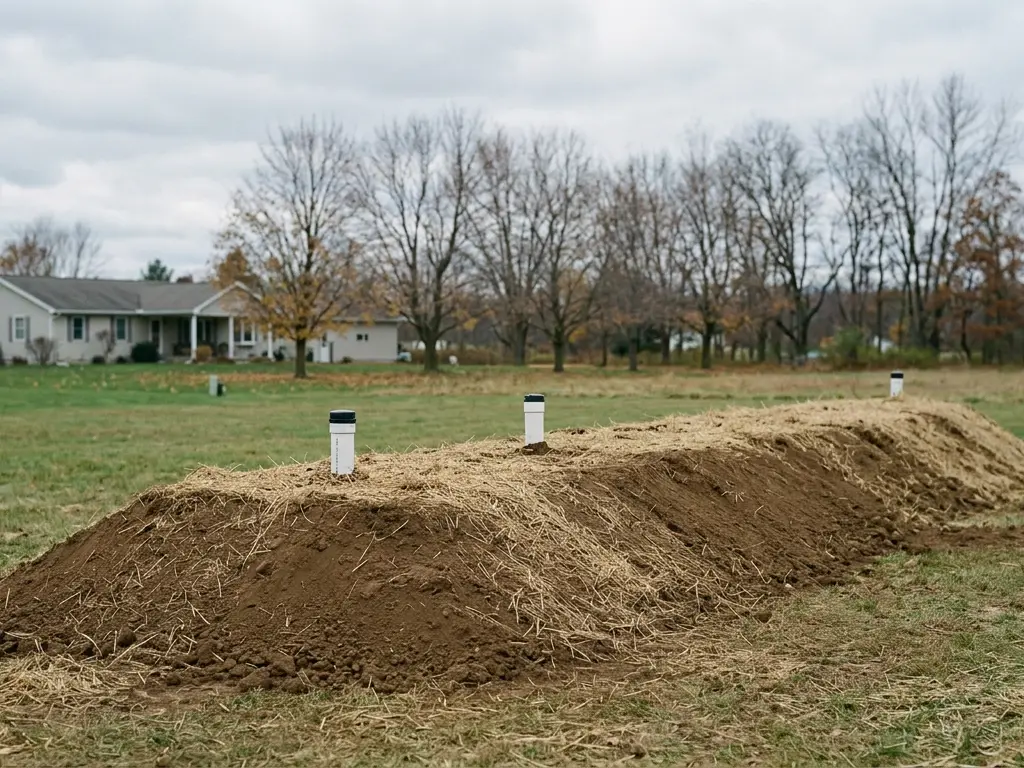
Raised fields for high water and tight soil
Syracuse Septic Pros Mound Septic Systems in Syracuse
Lifting the absorption field above ground that cannot treat wastewater on its own, built in fill that has to be placed and tested properly.
- Syracuse and ten towns within 20 miles
- Written price before any digging
- Licensed, insured local contractors
- Built around Onondaga County soils
Syracuse Septic Pros connects homeowners around Syracuse with local design professionals and excavators who build raised and mound septic systems. Where the water table rides high or the soil is too tight to take effluent, the field has to be built up into suitable fill instead of down into the ground, and a lot of the land north and east of the city is exactly that kind of ground.
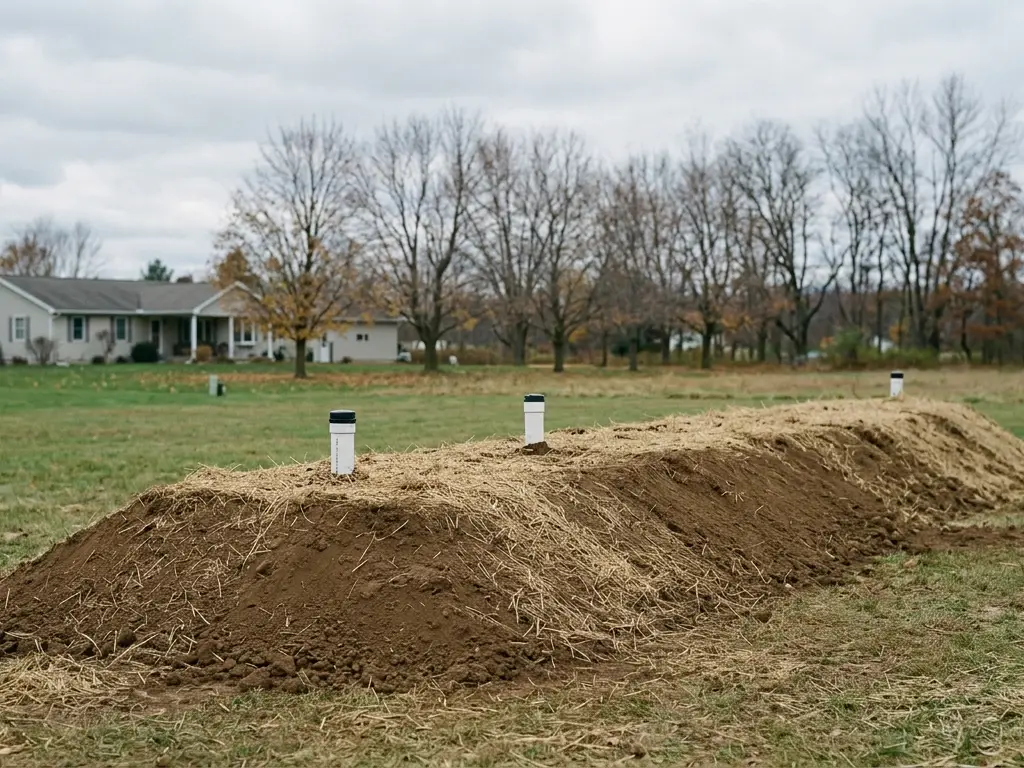
A mound built on fill that was never given its stabilization period can settle and fail within a few seasons, turning a $20,000 system into a second $15,000 to $25,000 job.
$15,000 to $25,000 for most raised and mound systems
A raised or mound septic system around Syracuse typically costs $15,000 to $25,000, the range a Syracuse excavator publishes for high water table, shallow bedrock and poor perc sites. Engineered mound replacements on the wettest sites can reach $22,000 to $28,000. Imported sand and fill are a large share of the cost, along with the design, which typically runs $1,500 to $5,000.
Get a price: (315) 922-5458Why a lot ends up needing a mound
- A test hole that shows grey mottling or water within four feet of the surface
- Rock or a dense, impermeable layer close to the surface
- Soil that percolates slower than sixty minutes per inch
- An old field that sat in groundwater every spring
- A lot on the flat lake plain north of Syracuse
The four-foot rule behind it
New York's residential standard wants at least four feet of useable soil between the bottom of a conventional absorption field and rock, unsuitable soil or the seasonal high groundwater. Effluent is treated as it moves through unsaturated soil. If the water table is two feet down, a conventional trench would be sitting in it for part of the year.
A raised system solves that by placing an absorption trench system in fill with acceptable permeability above the natural soil. A mound goes further, with a sand fill bed and pressure distribution. Both are alternative systems under the standard, and both need a NYS licensed design professional.
Where these systems are common here
USDA soil ratings sampled across this service area show where the pressure is. In Clay, 24 of 25 sampled points are rated very limited for conventional fields, and depth to a saturated zone is the leading reason. Hastings came back very limited at every point sampled, Sullivan at 24 of 25, with ponding and flooding also listed. Those are lake-plain and wetland-edge soils: Niagara, Collamer, Canandaigua, Carlisle.
South of the city the reasons change to slope and slow water movement in glacial till, which can also push a design toward fill.
Not sure what the system needs? Describe what you are seeing and get a straight answer on what it usually takes.
Call (315) 922-5458Onondaga County fill certification
Fill is where raised systems succeed or fail, and Onondaga County has a form for it. The Health Department's Fill Certification Form covers mound, raised, shallow and supplemental fill systems, and records site preparation, fill placement, and the depth and footprint of the fill.
Its rules are specific. Onsite fill or imported general fill needs a six-month stabilization period including a freeze and thaw. Imported sand or sandy loam can instead be mechanically compacted in lifts of no more than six inches. The stabilized fill is then percolation tested against the range in the approved plan, and the form is signed by a NYS licensed professional.
That stabilization period is why timing matters. A raised system planned in autumn with general fill may not be finished until after the following spring.
Living with a raised system
Many raised systems and mounds use a pump chamber to lift effluent into the fill, which adds a pump, floats and an alarm to look after. See alarm and pump repair for what those parts need. Keep vehicles off the mound, keep roof water away from it, and let grass, not trees, cover it.
Told your lot needs a mound
Ask what the test holes showed and whether a raised trench system or a full mound is needed. Call to talk through the options, the fill timing and what the design is likely to cost before you commit.
Call (315) 922-5458Questions people ask
How much does a mound septic system cost near Syracuse?
Typically $15,000 to $25,000. Engineered mound replacements on very wet sites can run $22,000 to $28,000.
Why does my property need a mound system?
Usually because there is less than four feet of useable soil above groundwater, rock or tight soil, which a conventional field needs.
What are the signs a mound system is having problems?
Wet spots or seepage at the toe of the mound, a pump alarm, sewage smell, or a mound that has settled unevenly.
How long does fill take to settle for a raised system in Onondaga County?
Onsite or general fill needs six months including a freeze and thaw. Imported sand compacted in six-inch lifts can go faster.
Does a mound system need a pump?
Many do, to lift effluent into the fill. That adds a pump, floats and an alarm to maintain.
Often done together
-
Leach field replacement
When the soil under the old trenches has given up, a new field in the right place, built to the state standard.
-
Perc tests and soil testing
Measuring how fast water moves through the soil and how deep the good soil goes, before anything is designed.
-
Septic alarm and pump repair
When the alarm sounds on a pumped or raised system, finding out whether it is a float, a pump or the controls.
Talk it through before anyone digs
Say what the house is doing, how old the system is and when the tank was last pumped. You will hear what the job usually involves, what it tends to cost, and whether it needs digging at all.
Call (315) 922-5458