
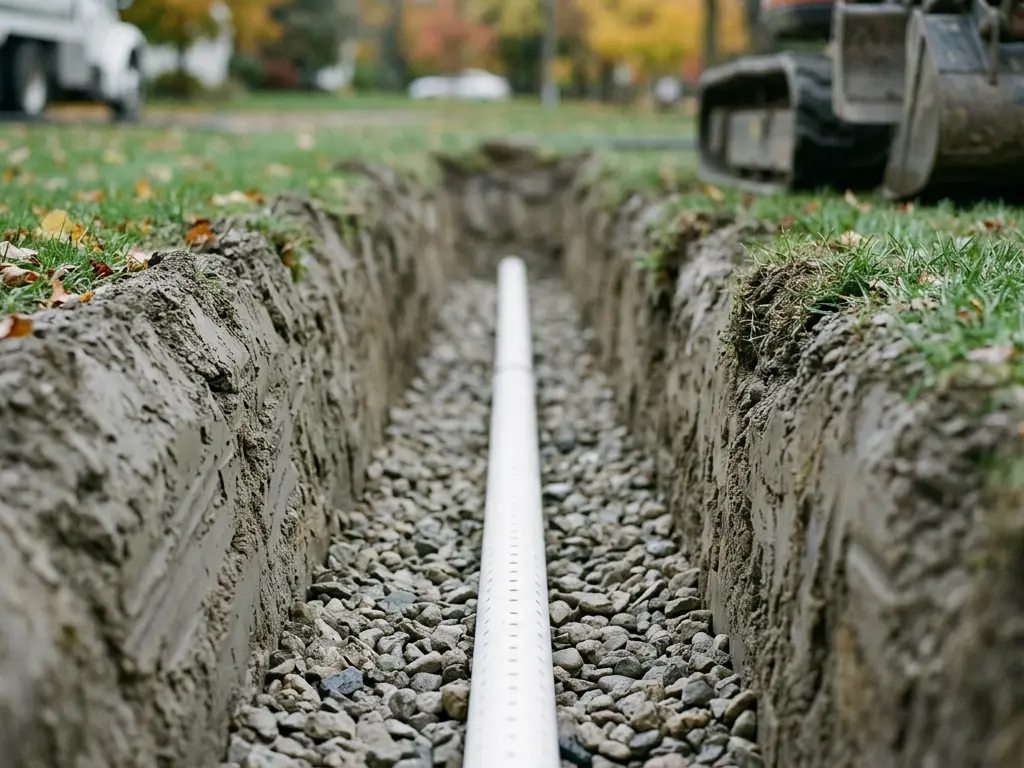
Saving a drain field that is struggling
Syracuse Septic Pros Leach Field Repair in Syracuse
Finding out why a field is slowing down, and fixing the causes that can be fixed before the only answer is a new one.
- Syracuse and ten towns within 20 miles
- Written price before any digging
- Licensed, insured local contractors
- Built around Onondaga County soils
Syracuse Septic Pros connects homeowners around Syracuse with local crews who diagnose and repair struggling leach fields. A field rarely fails all at once. It slows down, ponds after heavy use, then starts to surface, and somewhere in that slide there is usually a cause that can still be fixed for a fraction of what a new field costs.
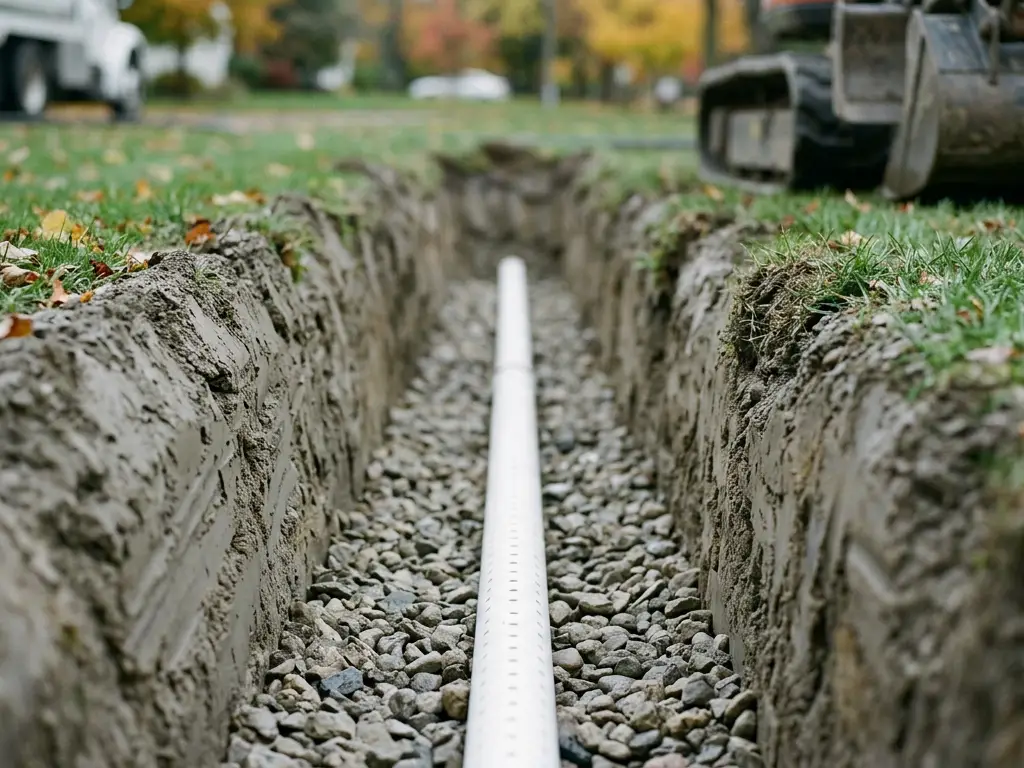
Catching a crushed line or a tilted distribution box early is a $1,500 repair; ignoring the wet patch until the whole field seals is an $8,000 to $15,000 replacement.
$1,000 to $5,000 for most field repairs
Leach field repair around Syracuse typically costs $1,000 to $5,000. Published cost guides put extensive repairs, including field rejuvenation, in the $1,000 to $5,000 range. Replacing a crushed section of line or releveling a distribution box sits at the low end. Anything that relocates or rebuilds the absorption area is a replacement and is priced separately.
Get a price: (315) 922-5458What a struggling field looks like
- Soft, spongy ground or standing water over the trenches after heavy water use
- Stripes of greener grass that follow the trench lines
- The tank refilling from the field as soon as it is pumped
- Slow drains that improve for a while after pumping, then return
- A sewage smell across the field on warm days
Why fields around Syracuse struggle
The soil does most of the treatment in a septic system, and a lot of the soil around Syracuse makes that hard. USDA ratings for septic absorption fields, sampled across the towns in this service area, come back "very limited" at most points, for three main reasons: a saturated zone close to the surface, slow water movement through dense till or silt, and in places, shallow bedrock.
On the lake-plain silts north of the city, the water table can rise into the trench bottom in spring. On the till south and west of the city, water moves slowly through the subsoil. A field built decades ago to older rules can be fighting either one.
Repairs that can work
Crushed or broken lines
Vehicles, frost and settling crush pipes. Replacing the damaged run restores flow to trenches that were being starved while others were overloaded.
A distribution box out of level
A tilted box sends all the effluent to one trench. Releveling or replacing the distribution box spreads the load again.
Surface water on the field
Downspouts, a driveway or a slope that sends runoff across the field saturate it from above. Diverting that water is often the cheapest fix of all, and New York's standard requires surface water to be diverted away from the system.
Solids carried over
If a broken baffle let solids into the trenches, fixing the baffle stops the damage. Jetting the lines can clear some buildup, but it does not restore soil that has sealed.
Not sure what the system needs? Describe what you are seeing and get a straight answer on what it usually takes.
Call (315) 922-5458When repair stops making sense
If the trenches are full of solids, the soil around them has sealed with a biological mat, or the seasonal water table sits in the trench bottom, repairs only buy time. At that point the honest answer is a new absorption area, and in much of Onondaga County the site will need a raised system or other design rather than a copy of the old trenches.
Relocating or extending a field requires a NYS licensed design professional under the state's guidance. Around Clay and Hastings, where almost every sampled point is rated very limited, expect the design conversation early.
Effluent on top of the ground
Keep people and pets off the wet area and cut water use in the house. Surfacing effluent is a health issue as well as a septic one, and the first visit should confirm whether it is the field, a line or the tank.
Call (315) 922-5458Questions people ask
How much does leach field repair cost near Syracuse?
Typically $1,000 to $5,000. Line repairs and releveling a distribution box are at the low end; rebuilding the absorption area is a replacement.
What are the signs a leach field is failing?
Wet or spongy ground over the trenches, green stripes on the lawn, the tank refilling from the field after pumping, and recurring slow drains.
Can a leach field be repaired or does it always need replacing?
Broken lines, a tilted distribution box and surface water can often be fixed. Sealed soil and a high water table usually cannot.
Does leach field jetting work?
It can clear solids from the pipes. It does not restore soil that has sealed around the trenches.
Why do leach fields fail in spring around Syracuse?
Snowmelt and spring rain raise the water table into the trench bottoms on poorly drained soils, so the field cannot take water.
Often done together
-
Leach field replacement
When the soil under the old trenches has given up, a new field in the right place, built to the state standard.
-
Distribution box replacement
The small box that splits effluent between trenches, and why a tilt of an inch can drown one trench while the others sit dry.
-
Mound and raised systems
Lifting the absorption field above ground that cannot treat wastewater on its own, built in fill that has to be placed and tested properly.
Talk it through before anyone digs
Say what the house is doing, how old the system is and when the tank was last pumped. You will hear what the job usually involves, what it tends to cost, and whether it needs digging at all.
Call (315) 922-5458